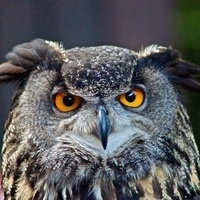
Retirement Adventures: History - Cycling
This is getting somewhat complicated
The original idea, and why I thought it was a good one
About a year ago I stopped working and am now a pensioner. I looked for something to do that would, ideally, combine sport, photography and my interest for history.
Living, as I do, 45 minutes per bicycle from Cologne, I thought that medieval trading goods traded through Cologne might be a good topic. Their sources and markets could be visited by bicycle if close enough and by Deutschlandticket if not. Once there, I could take photographs to my hearts content. And as there are literally hundreds of possible goods, if we go from the 4th century AD Franks up to Napoleon in the 18th.
Also, I could just start. I have a computer, a camera and an ebike. Perfect.
Also, as a project it is somewhat sustainable for a pensioner. I can replace the ebike with public transport or car if cycling gets to difficult, I can keep researching and (at least) looking at pictures as long as the eyes will work.
Early success with Stoneware
I first looked at Rheinisches Steinzeug (Rhenian Stoneware) because I was familiar with the potteries of Frechen, an easy cycle trip away. Even though the potteries in Frechen moved to industrial wares (vitrified clay pipes for waste water, tiles and large scale wall cladding, …) the heritage got preserved because one of the industrialists gave himself a museum for his birthday, the Keramion.
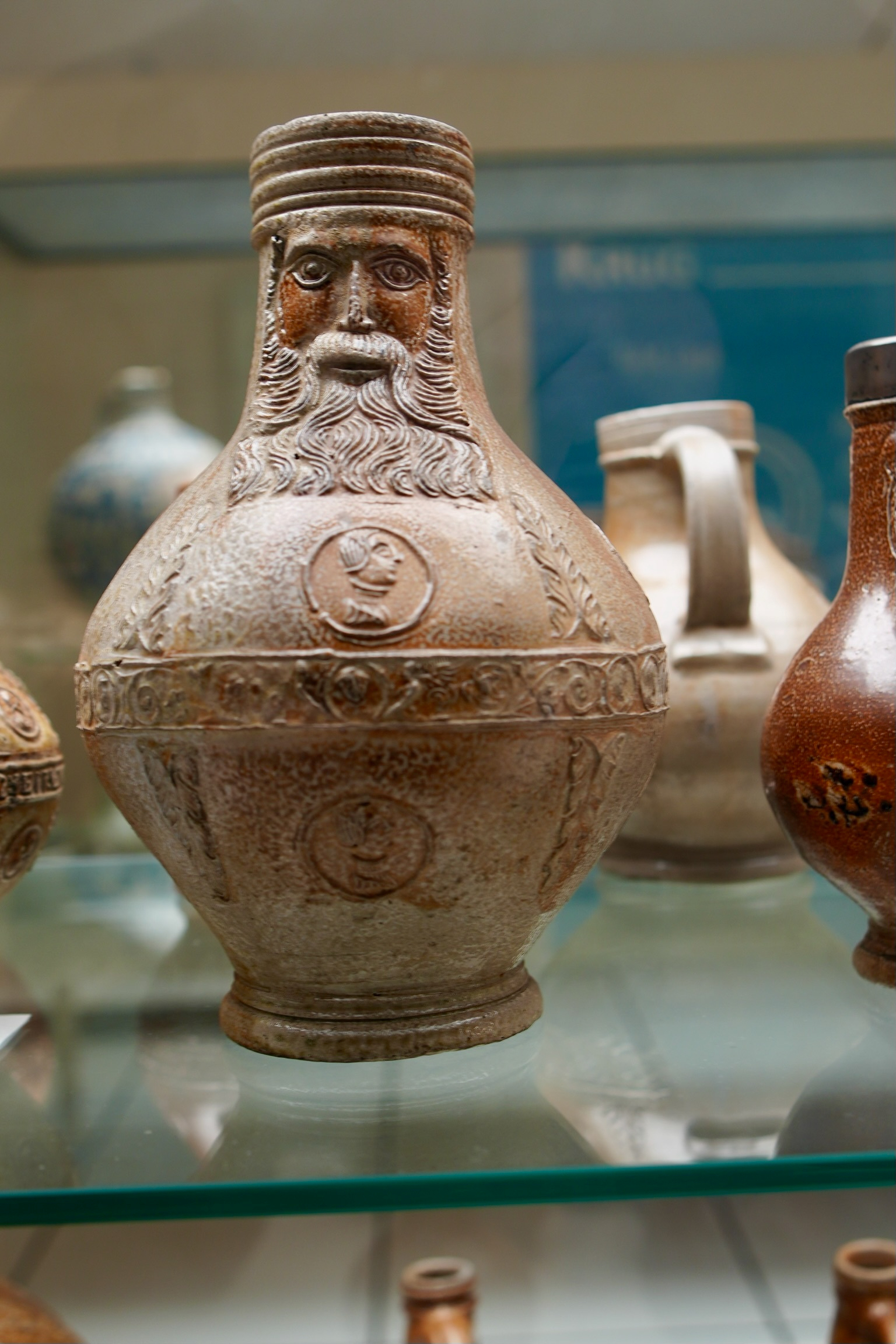
Further research led to Siegburg, Raeren, Langerwehe and the Westerwald and …
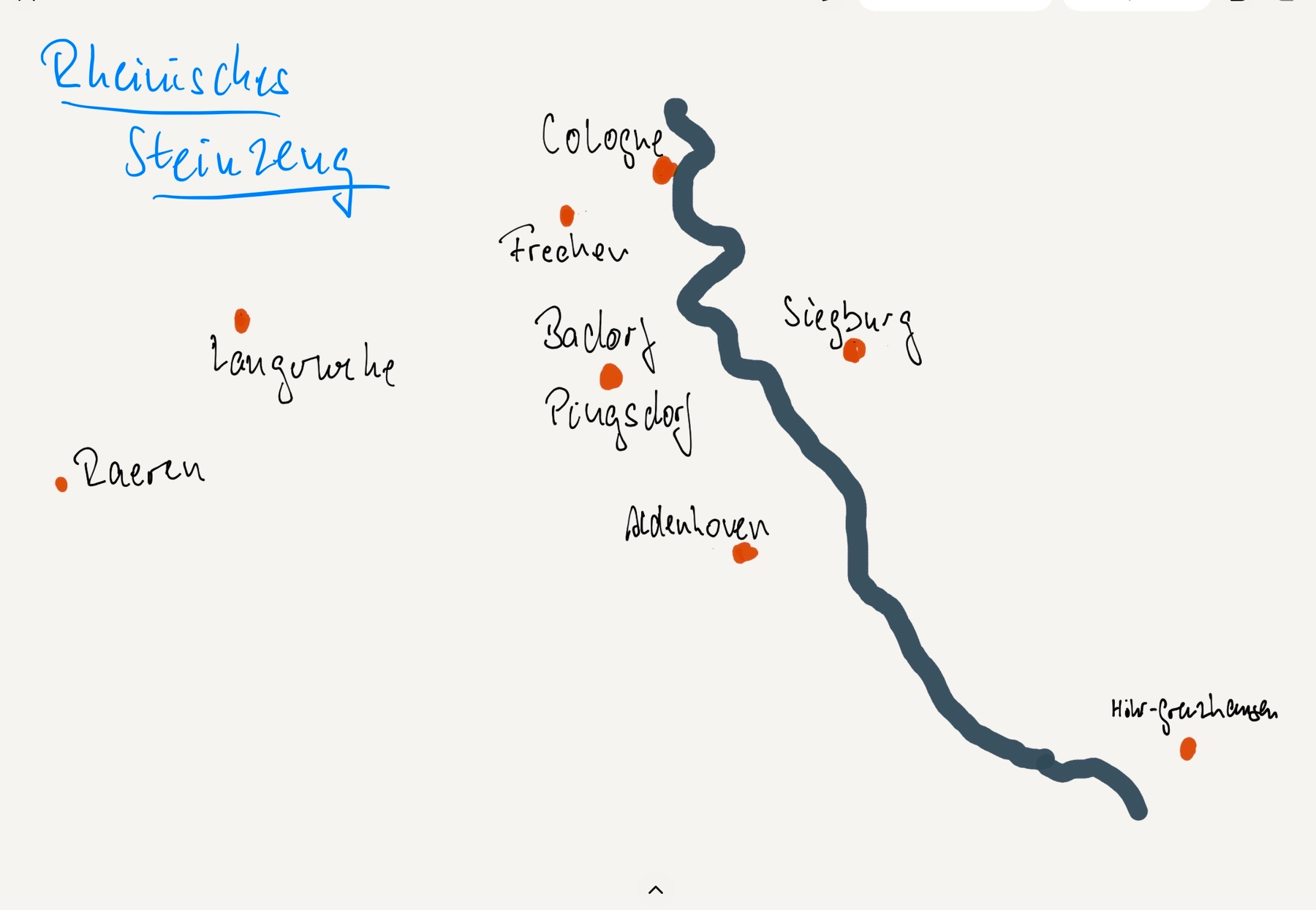
And apart from some museums being closed for renovation:
- Langerwehe
- Hetjens, Düsseldorf (reopened in the meantime)
some other museums had much less on show then I thought, or had been led to believe by (admittedly late 19th century) sources.
I traveled, I took pictures, this looked easy, or at the very least doable.
There is even an international research project going on: Bartmann goes global
Hitting the wall
Sarwörter
Coming off that “high” I selected the Sarwörter as the next topic.
Sarwörter were armor (Harnisch) makers (originally chain mail makers) and they gave that name to their guild as well as a Gaffel 1.
See also: The trade and history of the Sarwoerter in medieval Cologne
Where is the armor (Harnisch)
While the literature (see below) asserted quite confidently:
- armor (Harnisch) (and other weapons) were made in great number in Cologne
- armor (Harnisch) (and other weapons) were exported to hanseatic cities, to the Low Countries, to England, to Scandinavia …
- armor (Harnisch) were needed in large numbers in Cologne (and other European cities) where all male citizens were required to own armor (Harnisch) (and other weapons) to defend the city, if and when necessary
- the Sarwörter were an important part of Cologne politics for quite a few centuries
So far I have not been able to find a museum that exhibits Cologne armor (Harnisch) or chain mail.
Colognes production is overshadowed in the more popular literature by the production of the southern German cities of Augsburg and Nürnberg, who produced (also) high class pieces for nobles and royalty and are as such better represented in museums and collections. Much nicer to look at, then the workmanlike quality meant for the troops.
Where are the workshops
There are two challenges.
a) find the sources to pinpoint a workshop (let alone a particular source of iron). After all we are talking about broadly the time between 1100 and 1700. So quite a bit, and the references are sprinkled over many different sources.
b) Cologne has changed quite a bit since then and the city scape looks quite different - Secularisation and destruction of church property - Modernisation and the car centric city - The destruction during the Second World War
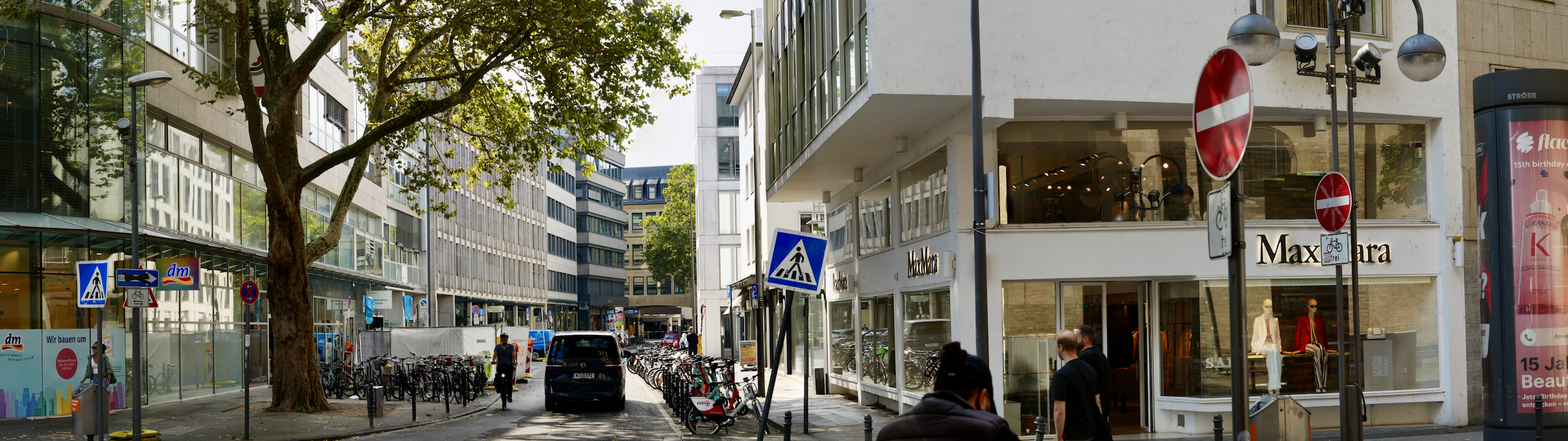
In Where are the pictures of the SARWOERTER you promised I traced the location of the Gaffel Hall of the Sarwörter Gaffel to his street junction.
Where did the raw materials come from
The obvious answer, for both is probably the Bergische Land which is a bit too large to photograph easily. There are also too many known mines for a quick trip. Further research is necessary. 2
That escalated quickly
Find some (more) sources
A trawl through Cologne City Libraries especially the section about Cologne found some good overviews, but nothing that would have been helpful to plan a cycling tour.
Online was much better, as a lot of literature up to the early 20th century has been digitized, getting the University library card opened up more, and now, being a “Gasthörer” access is very good.
The challenge is no longer finding stuff, but reading it all.
Oh sh’t
At the moment I have 703 source markdown files relevant to my “research”, ca 414 MB.
In hunting down relevant source material I early on stumbled on the Hansische Geschichtsverein. On their site they have almost everything they ever published since 1870 in digital form, or as links. This seemed really promising, since Cologne of course was a city of the Hanse.
But this also yielded almost two hundred books of several hundred pages, assorted (hundreds of) footnotes and so on.
If I wanted to do any cycling tours before my 100th birthday, reading each of the books in detail, making notes as I go, was not feasible, especially as most finds led to more books.
OBSIDIAN to the rescue
When I was still working, I used OBSIDIAN to keep track of my projects (I used to be a professional project wrangler for mumble mumble years), their deliverables, their actions, their minutes and my notes. All linked by simple tagging and made practical with Dataview (if you know, you approve).
So, I went back to OBSIDIAN and dropped in everything I could find. Which meant:
- Find a digital copy of a book (easy with the Hansische Geschichtsverein), translate into a markdown file and …
- Finding the digital copies got easier by getting a library card of Cologne University and then as of now, being a “Gasthörer”, which gives me full privileges in the library
- But then, > 700 source files with together 424 MB of text, phew
I tried various systems to make sense of it all, but it was extremely slow going.
What does done look like?
This is the most important question a project wrangler (or anyone, really) can ask of a task or project, and I had to remind myself that collecting and hoarding (all mine, mine) files was not the goal.
In this case the goal is:
- I have fun
- I learn something
- I ride my bicycle
- I take photos
The goal is not:
- becoming a specialist in Rhenish Stonewear, or Cologne weaponry, or …
- publishing academically original monographs
- turning into a caricature of a 19th century private scholar
- becoming a programmer
So some automation was required
An article about the “Karpathy LLM Wiki” caught my eye because the approach, if not necessarily the method, promised to bring some structure to my sources.
There even is an OBSIDIAN plug in that promises to turn your notes into a wiki.
In that wiki there would be two classes of notes, linked to each other, entities and concepts, which seemed ideal.
All my sources were either long out of copyright or open access, so I assume already in most KI models training materials.
Of course, turning ca 700 books into 3 to 5 (or more) entities and concepts first did nothing for my basic problem, I was just exchanging one collection of trees stopping me from seeing the forest with another, even larger, collection of trees.
I had to change the wiki structure to include a category person to be able to track professions or roles (eg being a Sarwörter or wine trader or …) and locations. At the moment the wiki has almost 950 persons, which are being enriched with their address, if any are documented. For this publications citing Schreinsbücher (medieval Cologne property registers) and guild documents are key. Also there are publications that cite “customs” (Akzise) records for cologne and list who was bringing what good into the city.
Also trade routes are now documented, there are some historical books on trade routes and a complete atlas of Hanseatic trade routes.
So the structure is, slowly, beginning to yield some results
Topic (eg Sarwörter)
- Person
	- Profession
		- Raw material (eg iron wire)
		- Product (eg chain mail)
		- Market in Cologne (if applicable, eg. Alter Markt)
		- Export market (eg. Groningen)
	- Adress
	- Time active (eg 1470)
Expect some pictures of modern houses. where medievall houses and workshops once stood. And pictures of maps, so many maps.
Next steps:
Product (eg chain mail)
- Raw material (eg. iron wire)
	- Sources
		- market (eg Frankfurt fair)
		- producer (eg a named mine)
	- Route to Cologne
Product (eg chain mail)
- Route to export market (eg Ochsenstraße (Groningen-Cologne))
- Export market (eg Groningen)
Then, because of LLM, each one has to be checked against sources while a (cycling) trip is planned. This is quite comfortable done with OBSIDIANs search function. 4
What next
- Finalise finding the address of and scheduling tours to Sarwörter locations
- Finding, confirming and mapping source locations for Sarwörter raw materials like iron, steel and iron wire, and eventually turn those into trips
- Finding, confirming and mapping the end destinations of the armor (Harnisch) …
- Repeat for
- Swords
- Lances
- (Cross-)Bows
- Gloves
- Helmets
- Wine
- Cloth
- Yarn
- Silk
- Leather(goods)
- … this could take a while
-
Gaffel, see Wiktionary ↩︎
-
Where did I steal that? It sounds like a quote ↩︎
-
If you use OBSIDIAN, see ASCII Tree Generator ↩︎
-
Would anybody be interested in the Obsidian setup and OpenCode? 5 ↩︎
-
Or will I be shot on sight? ↩︎
Where are the pictures of the SARWOERTER you promised
Well, not so simple, unfortunately. As I mentioned before, the whole harnish making business is frightfully underrepresented. There are no easily accessible chunks. But. I had some, little, success.
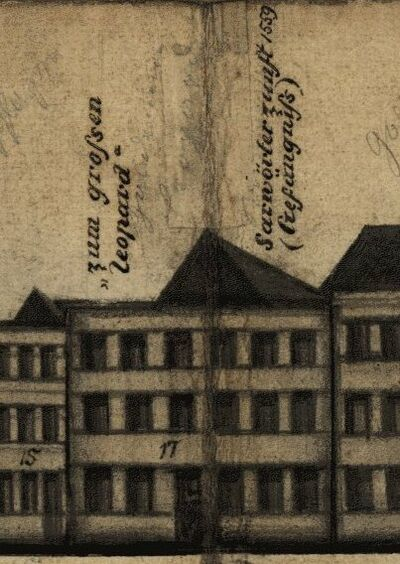
The Gaffel of the Sarwörter etc. had their Gaffelhouse (meeting and admin) in the House “Zum großen Leopard” opposite the Minderbrüder monastery. A Gaffel in medieval Cologne was a group of guilds in one society that had a) representation on the city council, b) in case of war were going to defend a part of the city walls c) represented the guilds to traders, other guilds and the city d) enforced the rules of its guilds on applicable products and, finally, e) together with the guilds of the Gaffel provided basic social security.
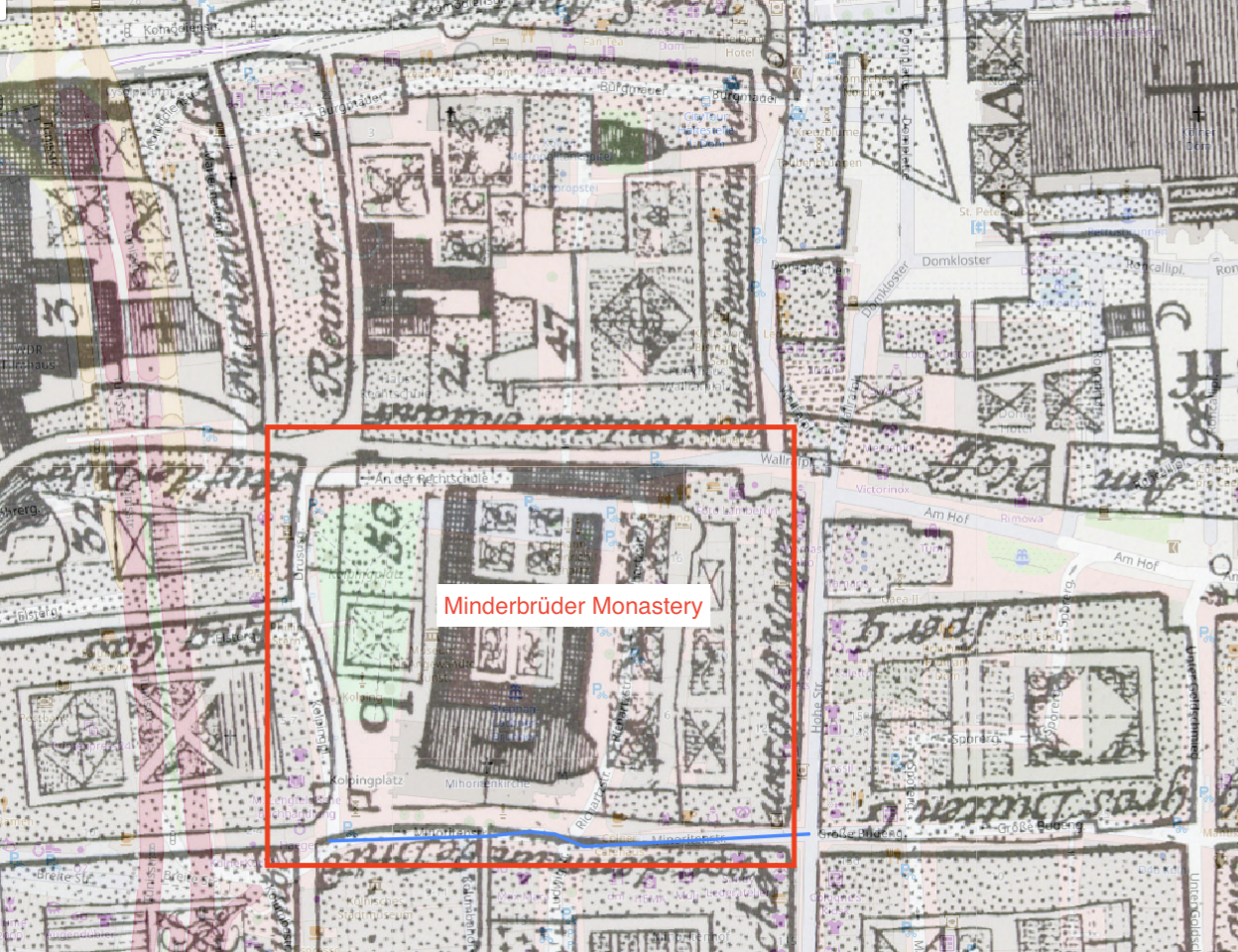
Cologne Cathedral in the top right corner, Map Rheinhardt 1752
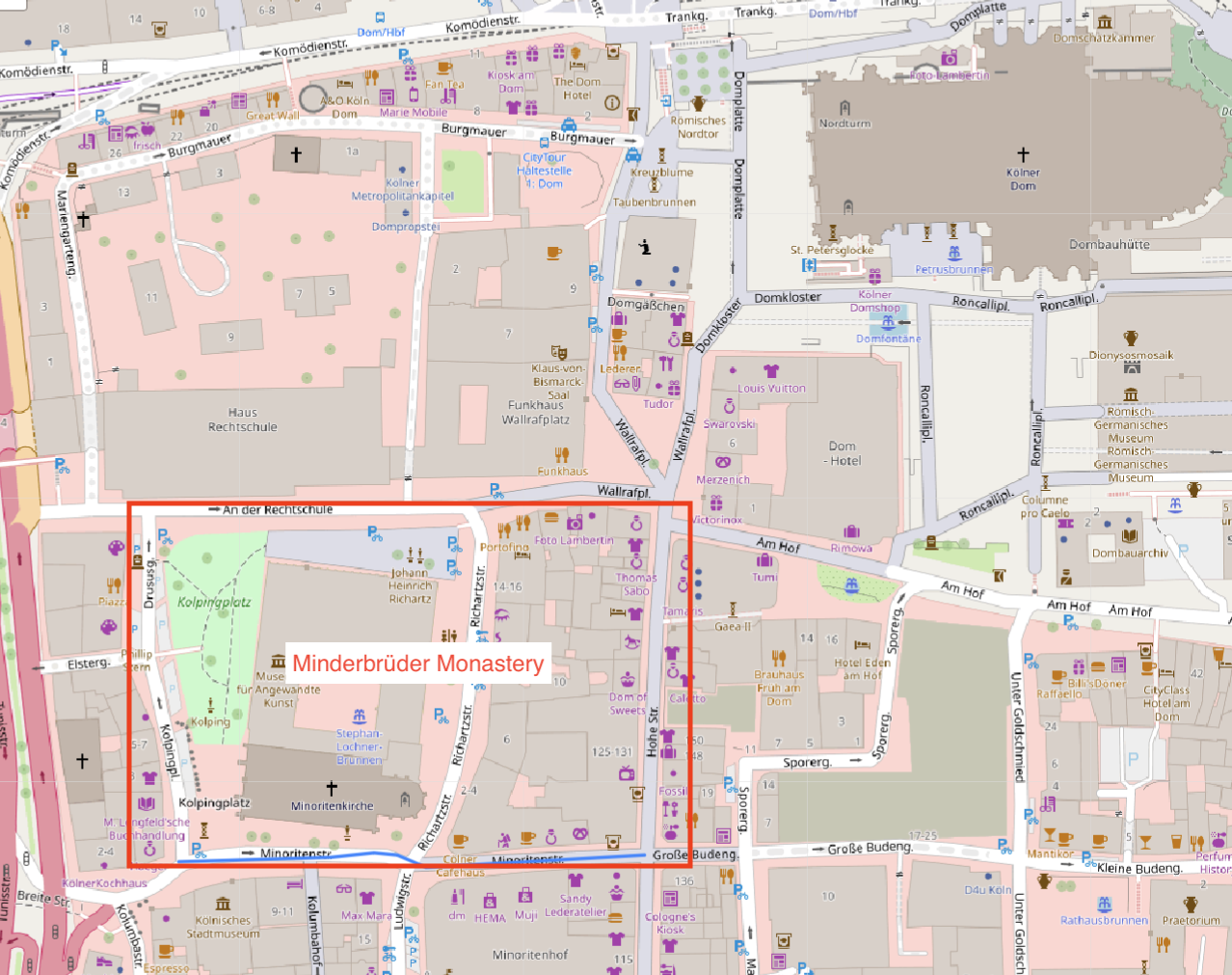
As we can see, the Minderbrüder (Minoriten) had quite some extensive holdings, founded on the area of the palace of the bishop of Liege (part of Church Provice of Cologne). In the east it is bounded by the Hohe Straße (the roman cardo maximus).
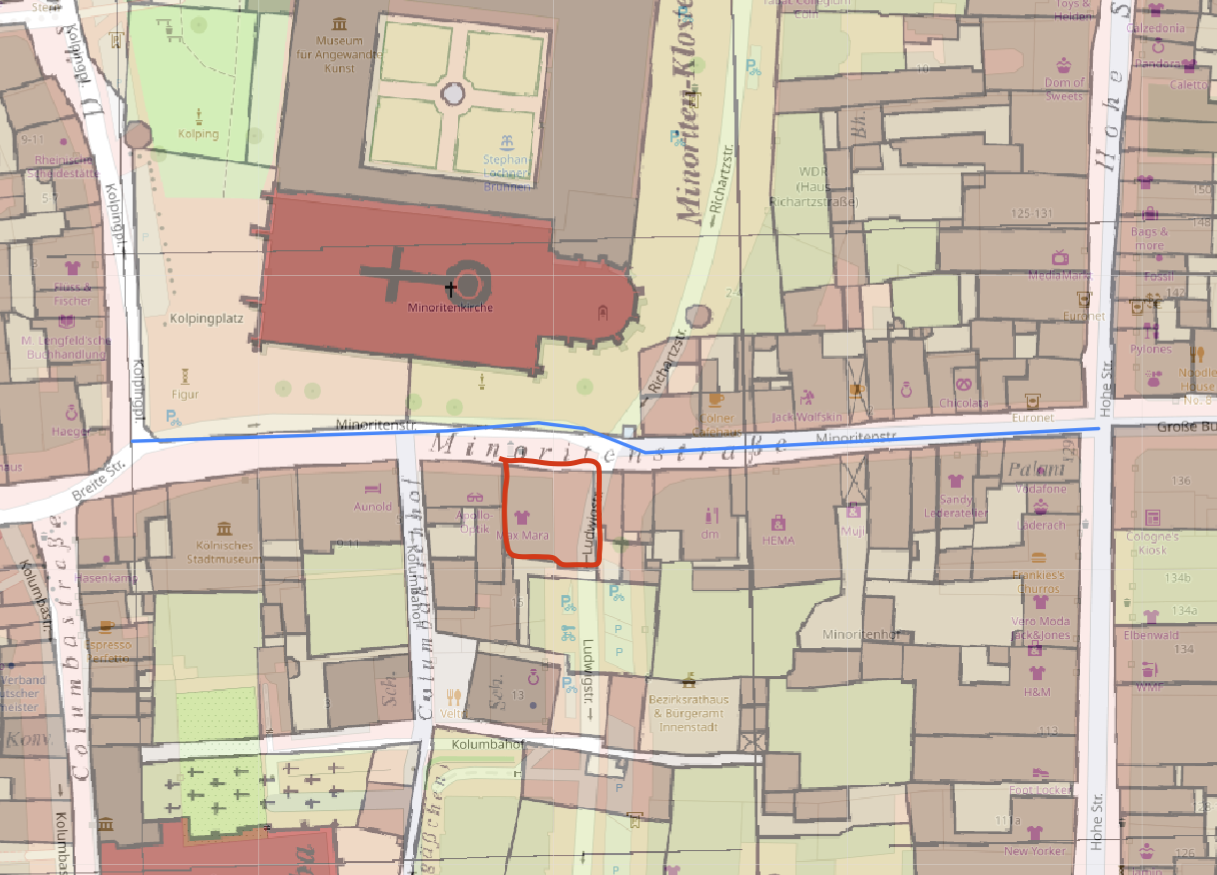
The House “Zum großen Leopard” was right opposite the southside of the church. And here is the photograph of the Gaffelhaus today.
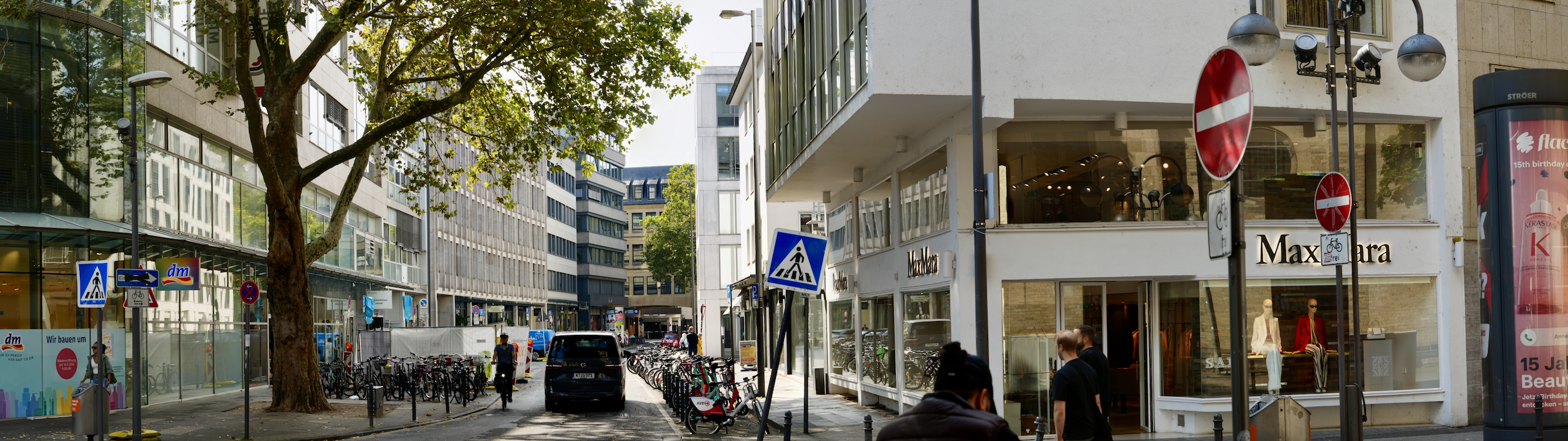
The house was torn down in the 19th century to make room for the Ludwigstraße, today the MaxiMara shop is on the site, which reached into the road. Here is the only picture of the Gaffelhaus.
Enlarged out of this “Kreuter’sche Karte”, namely No 62
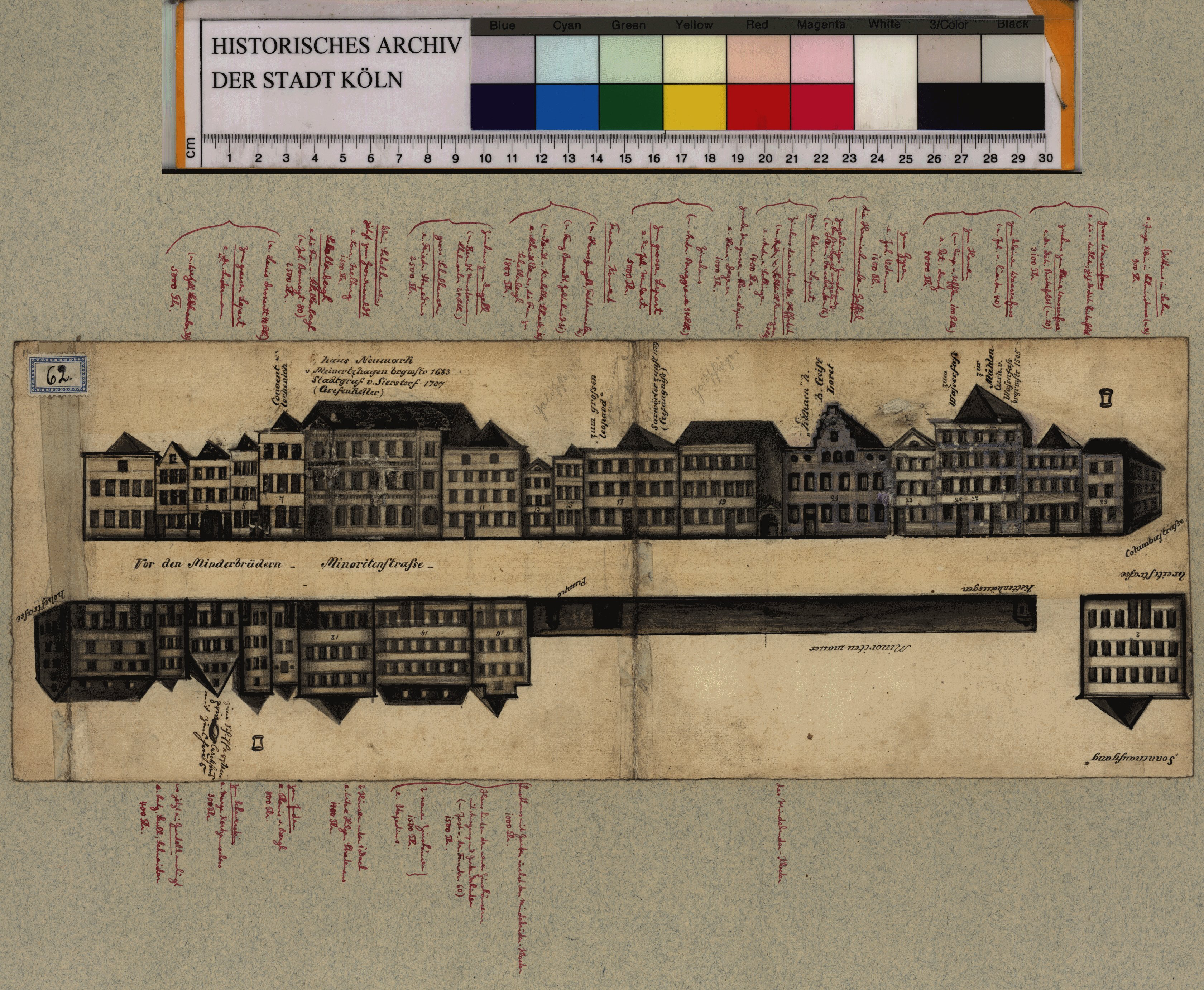
Some more about Franz Kreuter and his maps.
So, a start.
Am reading
- Ennen, Leonard: Geschichte der Stadt Köln : meist aus den Quellen des Kölner Stadt-Archivs ; 1, Köln 1863
oh my, has our view of history changed since he wrote this book. Especially our knowledge about the dissolution of the Roman Empire no longer ascribes it to moral decay that even the injection of youthful Germanic spirit and morally strict Christendom could not reverse.
#history
The trade and history of the Sarwoerter in medieval Cologne
#historycycle #history #cologne #koeln
Why Cologne
As I’m living here, and as Cologne provides 2000 years of history, this is as good a place as any to look at as an extended retirement project.
Cologne is situated directly on the Rhine and has had harbour infrastructure since Roman times. Also Cologne lies at the point where the Lower Rhine transitions into the Middle Rhine which need quite different vessels to use.
Below Cologne the Aak(e) was the freight ship adapted to the Lower Rhine and for coastal shipping.
The Oberländer (Mainzer Lade) was a flat bottomed ship that could also drive up the shore. These ships traded up the Rhine to Mainz and beyond.
But the city also was at the crossing of various land based trade routes, for example the Via Regia connecting the Atlantic and the Cracow.
What trade
In any village, town or city trading will occur. If the city lies on a trading route, traders will pass. If it lays at a cross road, many traders will pass. If, like Cologne, it lies at the heart of many roads and a major river, where also for navigational reasons two different ship types are used for travel up stream versus down stream, you have opportunities
Also Cologne was an important administrative center. First as the capital of the Roman province of Lower Germany, as a bishops, later archbishops seat and the Center of a church province that included the sees of Cambrai, Lüttich, Minden, Münster, Osnabrück and Utrecht.
The Archbishop of Cologne also, at one time or another, as the Duke of Lothringen, the Chancellor of the HRE for Italy, an Elector of the HRE, the so called Erzstift which included large landholdings including much of Westphalia.
For a long time they were also the undisputed, later disputed, later titular, head of the city itself (again a slight simplification of several hundred years of development.
In any case these factors led to Cologne being one of the largest trading cities north of the Alps.
What is a Sarwoerter
Sar(w) is an old German word relating to or meaning armour. A Woerter, Worter or Woerter is someone who makes, in this case armour.
Specifically the Sarwoerters started out making mail and then, later, also plate armour.
The trade is documented in Cologne from 1396 onwards. In that year various guilds but also brotherhoods of merchants and similar were grouped into 24 Gaffeln, who (1) were who elected the city councillors (much simplification here) and (2) were responsible for the defence of a section of the city walls and (3) were part feasting and part mutual aid societies (much simplification here).
What this tells us, the trade needs to be (much) older, because in a “revolutionary” setting you don’t become the eponym of one of the new Gaffeln who will share power in the city, if you are small and new.
How long do they go back?
Who knows?
The oldest known Schreinsbuch entry (medieval land registry) has an Ezelin Loricator as a witness in 1150. His “colleague” Arnoldus receives half a house as dowry when he marries Agnes, the daughter of Gerardus some time before 1200.
In the late 13th century we find Adam, and (another?) Adam plus wives Gertrude and Reynerus with wives Elisabeth.
This shows at least 2 centuries before the Gaffel formation.
Known Sarwoerter
- Ezelin loricator (n. 1150)
- Arnoldus loricator (12. Jh.)
- Heinrich Gladiator (1200/1239)
- Adam loricator (1273–1283)
- mag. Reynerus (Reynardus) loricator (1291–1311)
- Gerardus Helmslegere (1298)
- Ec(k)bert Armificus (1334)
- Rutg. Sarwortere (1305)
- Reynorus Sarwortere (1311)
- Conr. Sarwortere (1335)
- Bertram Armificus (1343)
- Bertrami sarworter (magister, † v. 1358)
- Thilmannus sarworter (1358, Sohn des Bertrami)
- Heinrich von Aulstorp (1428, Harnischmacher)
- Heinrich van Ailstorp (Harnischmacher)
- Heinrich van Alfter, gen. Kruch (Harnischmacher, 1466)
- Johann van Droilshagen (Lehrling bei Harnischmacher Heinrich van Alfter, 1466)
- Simon van Wipperfürde (Harnischmacher, Kölner Bürger; seine Tochter Giertgin (*ca. 1385))
- Toenis van Mölheim (Harnischmacher, 1489, 1494)
- Der alde Neve (Sarwörter, 1473)
- Yelle (Sarwörter, 1473)
- Meister Mais (deutscher Harnischmacher, aufgenommen 1473)
- Peter van Alfter (Harnischmacher, 1473)
- Clais v. Ense
- Jan Kemper
- Jacob v. Wedich
- Evert v. Wedich
- Goedert Gryn der junge
- Heinrich v. Bercheym
- Johan Koelgijn
- Hans v. Berckervelde (Schwager eines Sarwörters)
- Joh. Wilh. Lohkamp (letzter Bannerherr)
- Thijs / Matthias Sarwoerter (Aachen)
- Johan Zylman (1397)
- Herman aen deym Maltzbuchil (1397)
- Joris Paffehase (1397)
- Henkyn swertveyger (1397)
- Heinrich Swertveger (1397)
- Konrad Swertveger (1397)
- Gierhart Franck (Schwertfeger, 1483)
- Berthold Harnischmacher (16. Jh., Tumultführer)
- Caspar Harnischmacher (16. Jh.)
- Damian der Harnischmacher (16. Jh.)
- Johann von Attendorn (Harnischmacher, Gaffelbote, 16. Jh.)
- Johann von Wermerskirchen (Harnischmacher, 16. Jh.)
- Christ. von Holte (Sarwörter-Amt, 15. Jh.)
- Heinr. von Rollenberg (Sarwörter-Amt, 15. Jh.)
- Glas Reyderade (Sarwörter-Amt)
- Mart. Reve (Sarwörter-Amt, 15. Jh.)
- Walter de Beche / de Besche (1665–1716): Hauptmann der Harnischmacher-Zunft, Ratsherr 1709–1715 für das Sarwörteramt
- Sebastian Honvalle (* 1675): Barbierer bei der Harnischmacher-Zunft
- Johann Josef Eichen (1748–1809): Bannerherr der Sarwörter, Kaufmann, Ratszugehörigkeit 1786–1797
- Benedikt Josef Wolter de Beche (1751–1831): Bannerherr der Sarwörter, Schreinsherr bei St. Columba, Laurenz und Martin, Ratszugehörigkeit 1786–1796
But what about the quest?
The quest was to identify places in or around Cologne, having to do with a traiding good, go there by cycle and take photos.
Places got identified, but, due to progress and of course the second world war, there are no historic buildings left to photograph. Even the part of the city walls that the Sarwoerter were responsible for, no longer stands.
I’ll do the trips anyway while I ponder a new research topic and collect armour collection museums to visit.
The start
So, how is my “research” going?
The answer is “perhaps” - new sources are going into my stash (Obsidian), information piles on, BUT, the goal remains elusive.
The goal remains, spent my retirement time cycling with my camera to places where trading goods of medieval Cologne had been produced, traded or used.
After the “success” of looking at Rhenish Stoneware I thought that medieaval harnesses might be a good next topic.
Oh my.
Getting the internet to even acknowledge an armour making industry in medieval Cologne was tricky. Mainly because the internet focuses on the flashy princely armour made in places like Augsburg and Nürnberg and ignores the workman like stuff, provided to troops in the 30 and 80 year wars.
Also the scholarly reception of armour and of specific guilds and trades seems to be sketchy. Here I’m open (desperate) for correction.
What we know:
- There is a guild of armour makers (Sarwörter)
- They are the naming guild of the Sarwörter Gaffel, one of 22, which are important parts of the constitutional reforms of 1396 in Cologne. A Gaffel sent elected representatives to the City Council, was responsible for the defence of a section of the city wall, …
- Cologne traded armour
- in the City
- in the Rhine and Maas Region
- south, down the Rhine into France, Switzerland, …
- north, up the Rhine into France, Netherlands, England, Skaninavia and the Baltics
- etc.
But all that is not really cyclable or photographable
Thankfully @bookandswordblog@scholar.social helped with some sources, of which
- Pierre Terjanian, “The Armourers of Cologne: Organization and Export Markets of a Foremost European Armour-making Center (1391-1660),”
- Hermann Kellenbenz und Klara von Eyll eds., Zwei Jahrtausende Kölner Wirtschaft, Band I (Greven Verlag: Köln, 1975)
proved especially helpful.
The “Zwei Jahrtausende …” confirmed what I already knew, but also provided a few hundred suources for my overall “trading goods” search, but also for the harnesses. In the meantime I found a physical copy online for 7 € including shipping, so I’ll never be without it again, even when I get my loaner back to the library.
“The armourers …” went into details and also provided more sources, many of which were downloadable which is kind of ideal for Obsidian ;-)
I’m now more confident, that I can find places to cycle to and photograph.
So, thanks to @bookandswordblog@scholar.social and @mrundkvist@archaeo.social who made the connection
Well, my research is going poorly. What research I hear you ask? Well, short version I want to cycle to the production sites of medieval Colognes trade goods…
The first trade goods were Rhenish Stoneware goods. And it went quite well, apart from a few museums being closed for renovations.
Cool, I put the missing museums on a list and contemplated my next coup.
I chose harnesses. Why, I hear you ask!
Easy, in my collection of digitised books, and there’ll be a post about that later, the making and the makers of harnesses are well attested.
Turning this into actually visitabel locations remains elusive.
It turns out, I was lucky with stoneware. In the mid 19th century stoneware was first discovered by collectors and the systematised by scholars. And the books have been digitised and are easily accessible.
#history #geschichte #historycycle
Keramikmuseum Westerwald
Today visit was a little frustrating.
Nice exhibits, appropriately labelled, starting with Roman period earthenware and continuing to contemporary and technical ceramics.
How clay is dug, how a potters wheel is used, how stoneware is burnt, including a very nice replica Kannenofen.
Of course Bartmänner are also on display.
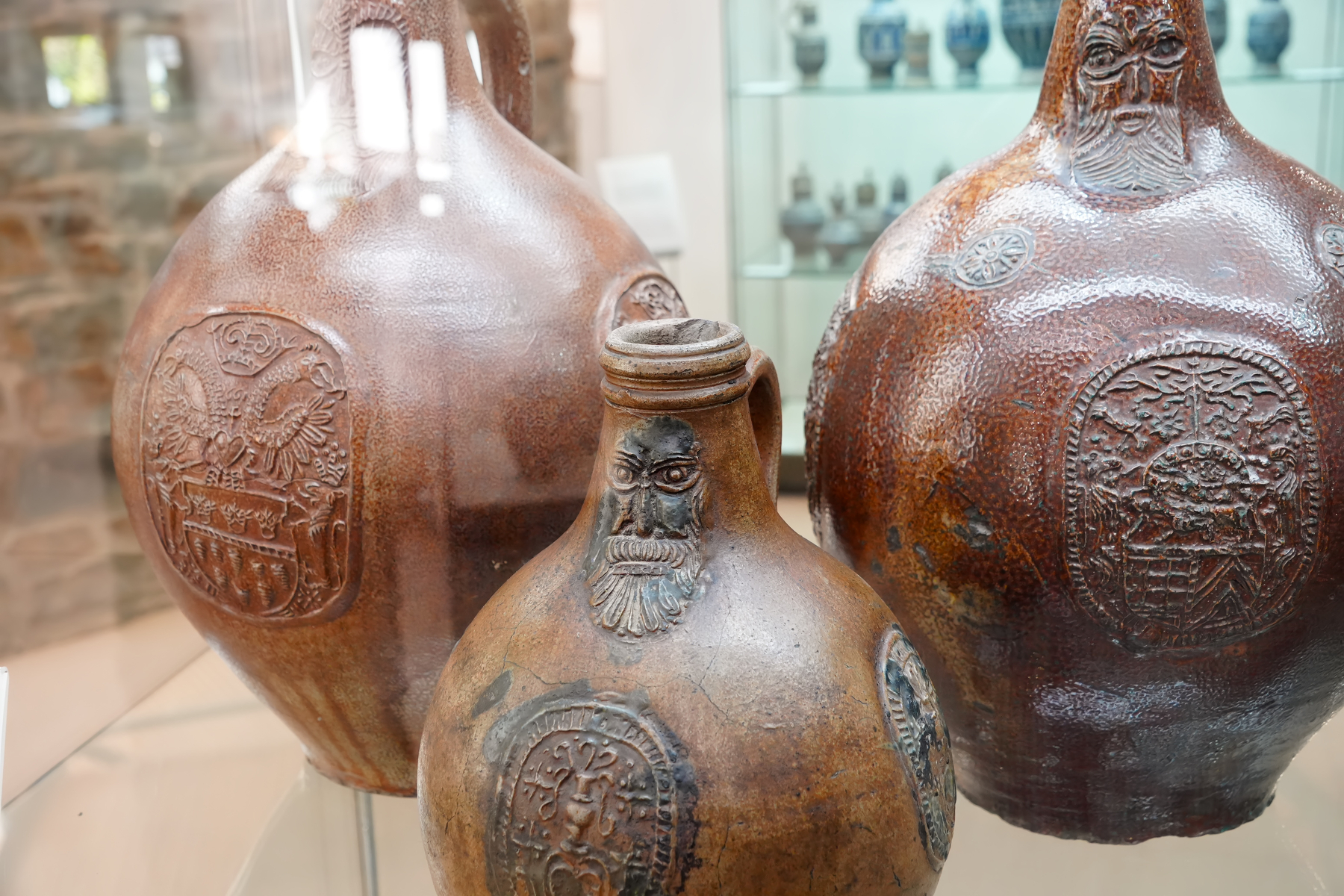
Some of the connections to Siegburg, Raeren, Frechen, Cologne are mentioned, but, of the complex trade that carried the finished wares all over the world, no mention.
Of how the decorations on the stoneware aimed at a growing affluent group of lesser nobility, clergy and trades and let the potters compete with cheaper earthenware and more expensive pewter, no word.
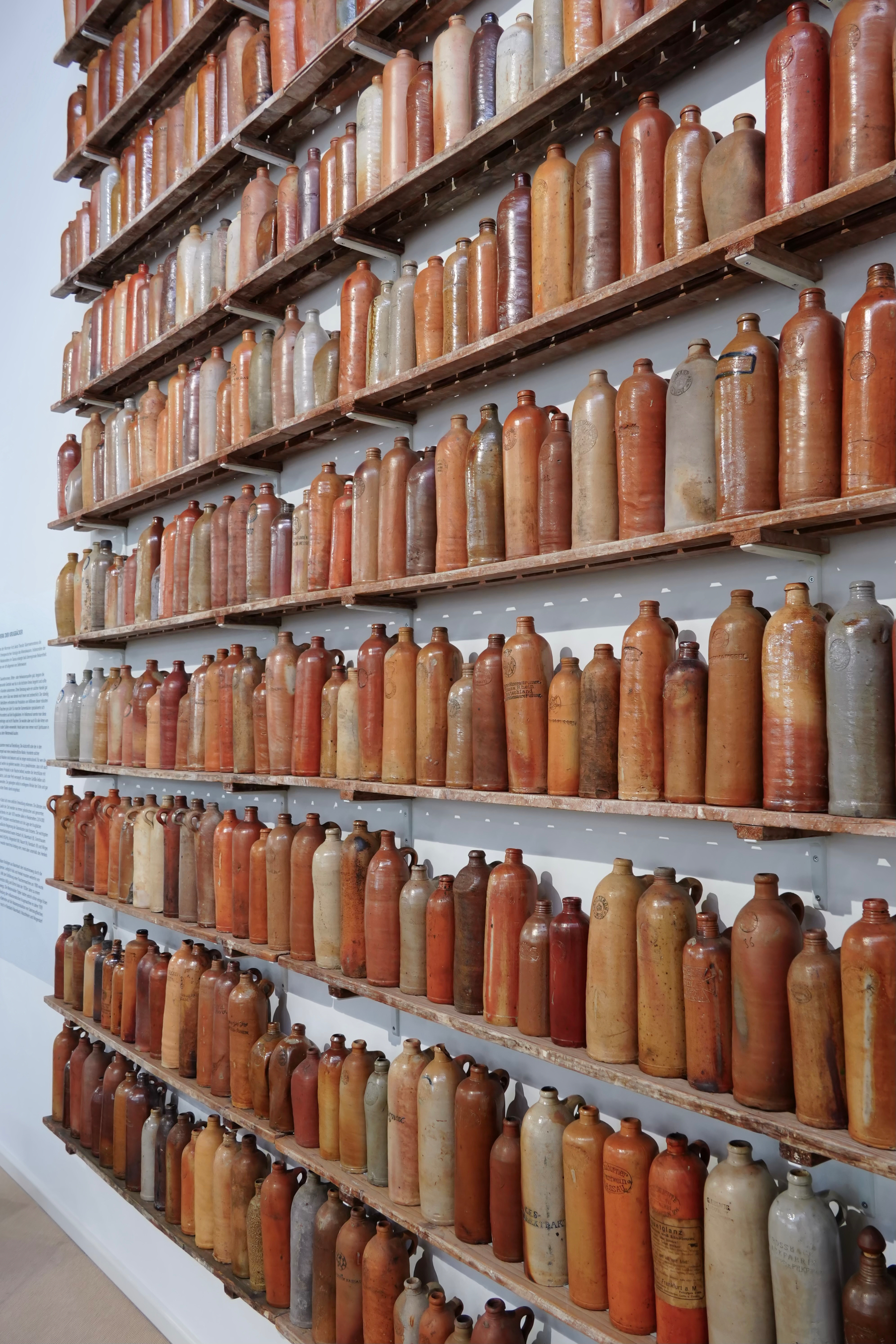
There is a whole wall of stoneware bottles. There is a mention, that they were produced to order for Portuguese wine, English gin, sparkling water… But again, no mention of the trade routes.
The website is better, but has no links to sources. Still, if you are close, a fun morning or afternoon.
#historycycle #RhenishStoneware #photography #fotografie @photography@fedigroups.social
On the way back from Raeren I stopped at Töpfereimuseum Langerwehe which is closed for renovations. Have to come back in a year or three.
#HistoryCycle #history #photography #fotografie #steingut #steinzeugkeramik #stoneware #steengoed
Yesterday I drove to #Raeren (pronounced Raaren) to look at some (more) stoneware pottery. Specifically I went here: Töpfereimuseum Raeren
If you’re ever in the area (think Aachen) than it’s WELL worth a visit.
The museum is in a castle.
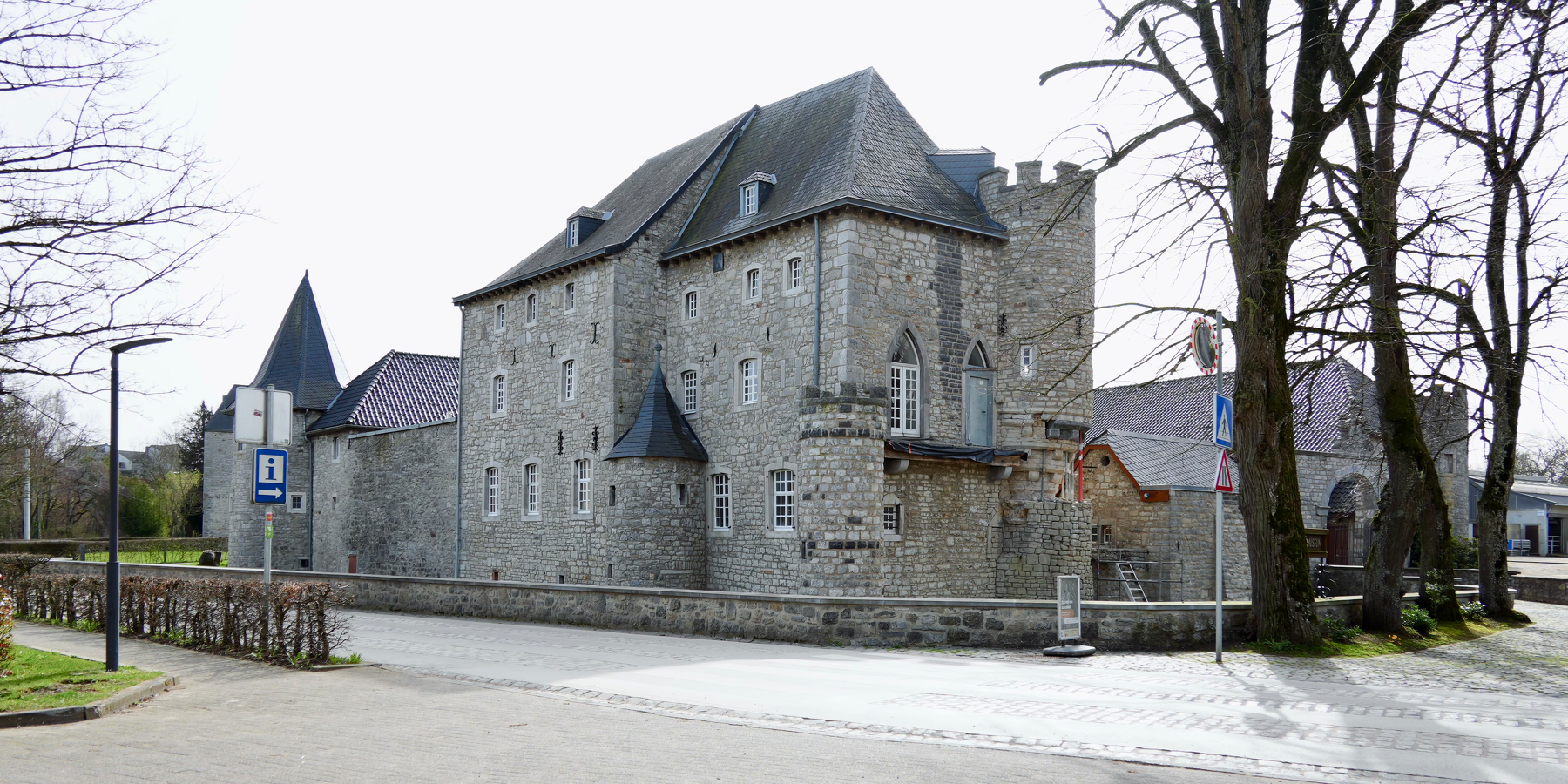
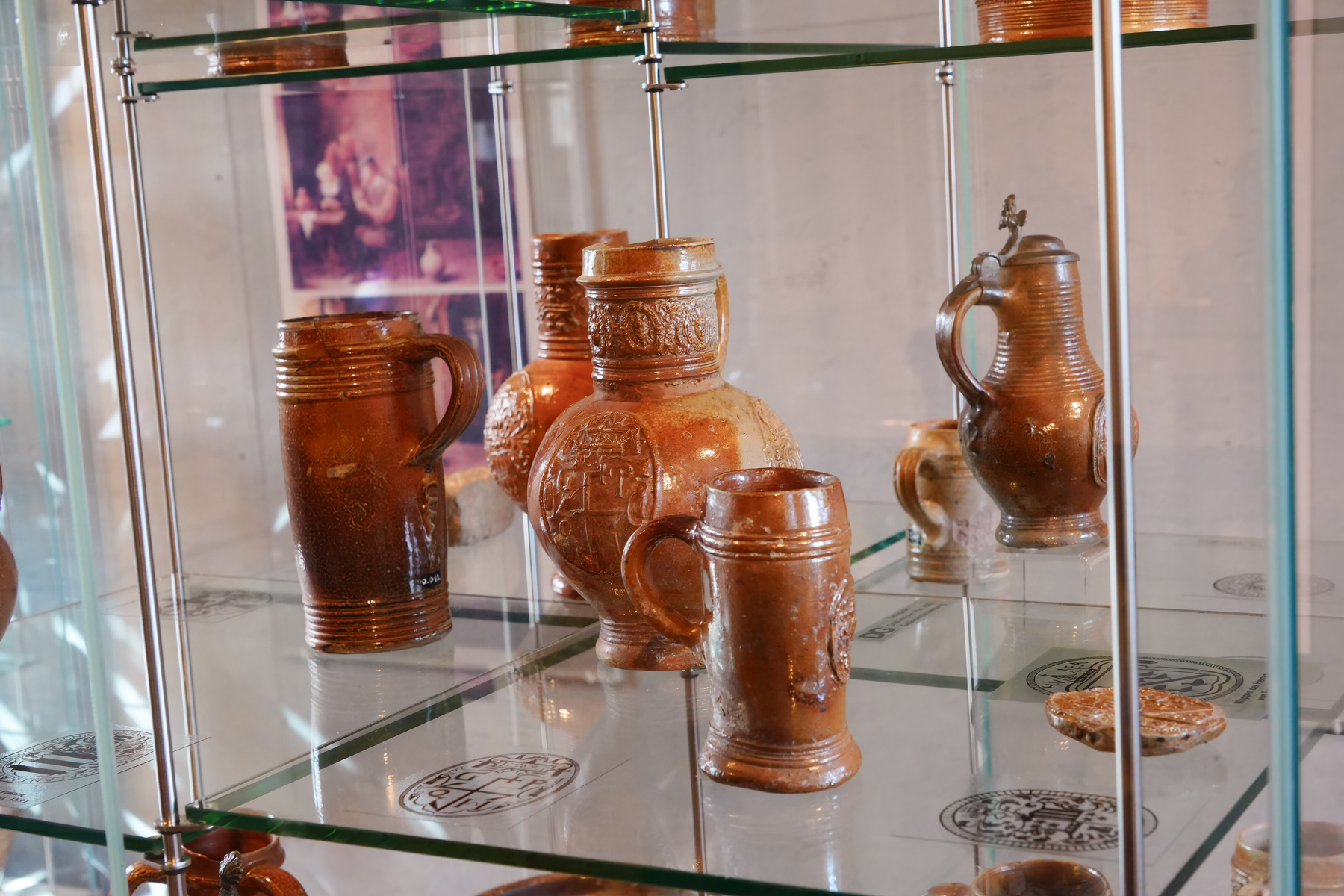
Inside a nice collection of Rhenish stoneware and on stoneware production and trade. Raeren traded via Colognes Alter Markt but also served some markets themselves. The relatively close Langerwehe produced stoneware mostly for “local” consumption, Raeren produced mostly for long distance (Hanse) trade.
While picking up some of the popular forms of Rhenish stoneware, eg Bartmann Krüge, they also developed distinctive forms.
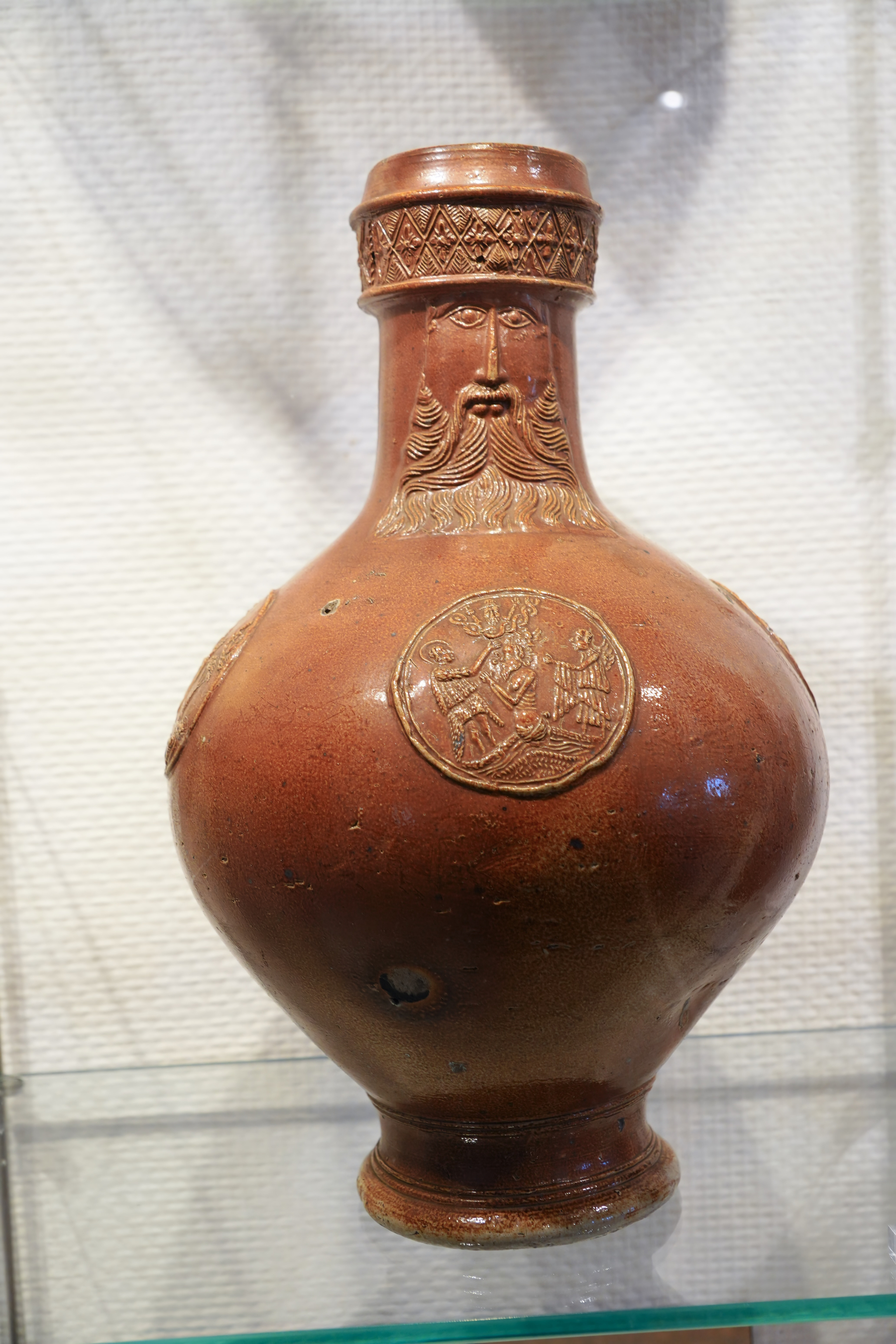
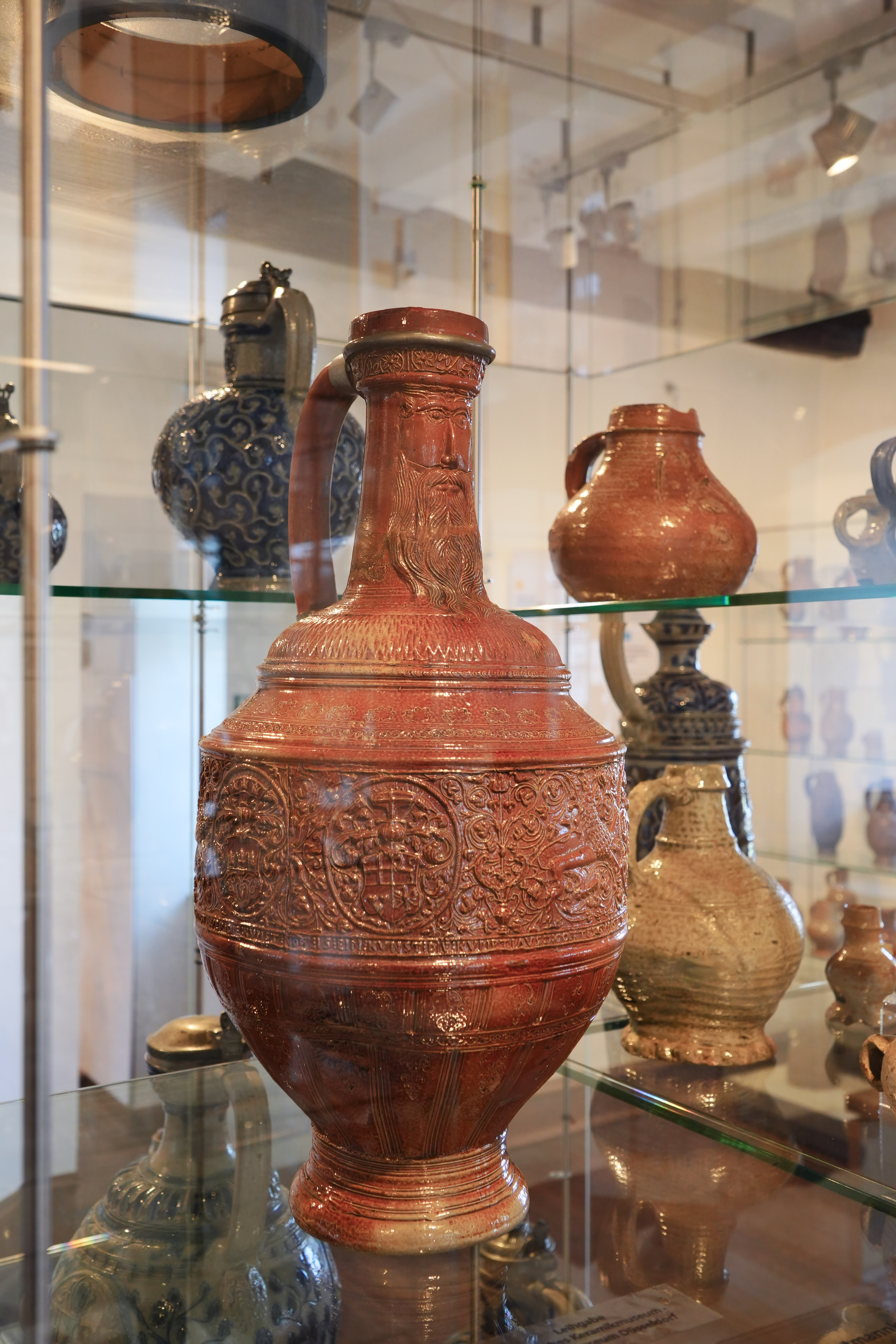
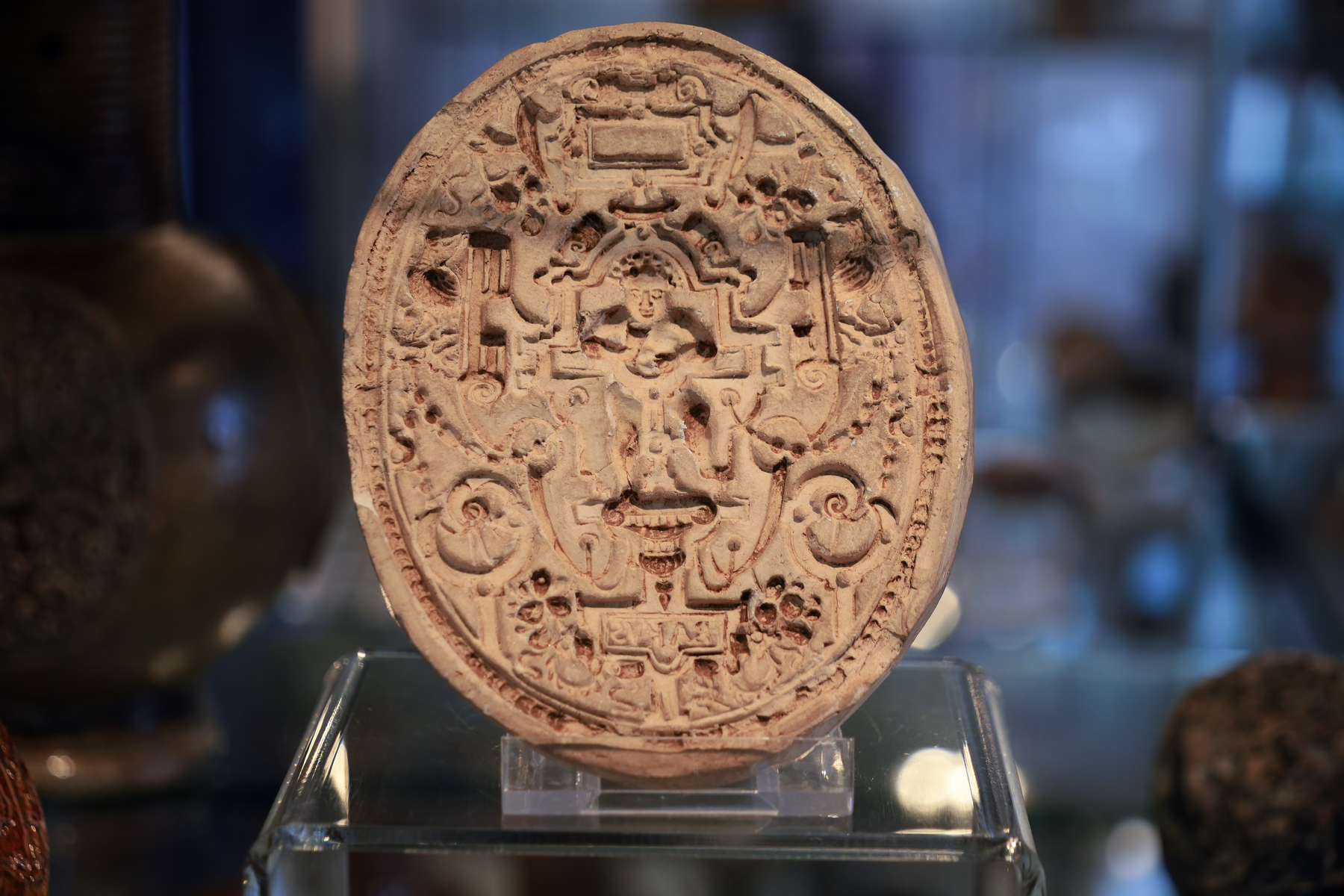
And here one of the forms used to emboss the jugs (which were produced by the tens of thousands.
If you were a good (large) customer you got your coat of arms on the jugs, which were also used for religious (pro catholic/protestant) or political messaging. Early propaganda/advertising
#HistoryCycle #history #photography #fotografie #steingut #steinzeugkeramik #stoneware #steengoed
Tuesday, some history
We visited the LVR Landesmuseum Bonn as they have a smallish collection of Rhenish stoneware
They are also part of the Bartmann goes global project, which I’m following somewhat precariously.
Anyhow, this is what they have to say about stoneware
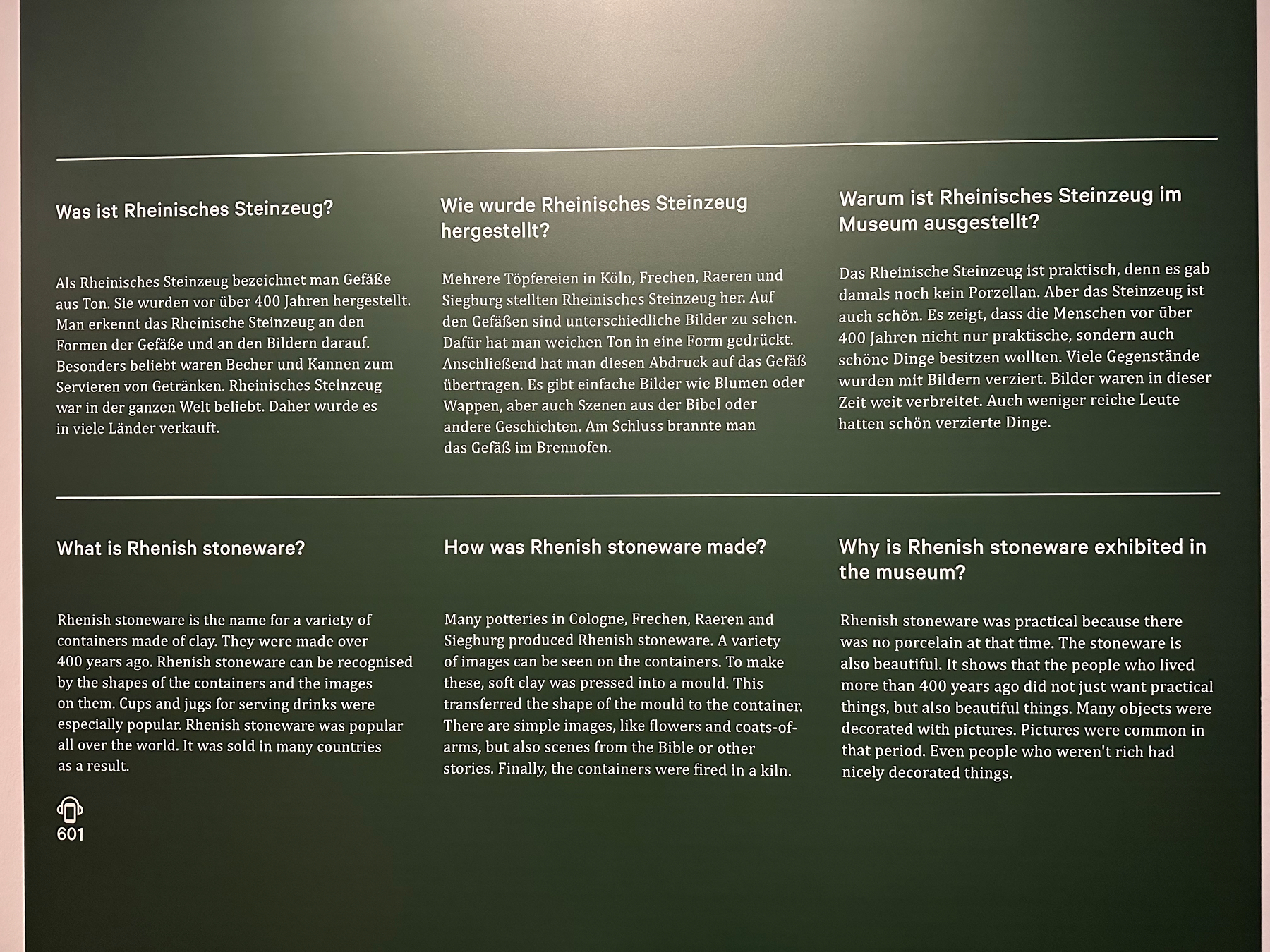
Paraphrasing slightly:
Rhenish stoneware, a variety of clay containers made over 400 years ago, is recognized by its shapes and images. Cups and jugs were especially popular. Rhenish stoneware was sold worldwide, making it a global phenomenon.
Potteries in Cologne, Frechen, Raeren, and Siegburg produced Rhenish stoneware. Soft clay was pressed into molds to create various images, from simple designs like flowers and coats-of-arms to scenes from the Bible or other stories. Finally, the containers were fired in kilns.
Rhenish stoneware is exhibited in museums because it was practical and beautiful. It reflects the people’s desire for both practicality and aesthetics over 400 years ago. Many objects were decorated with pictures, a common practice during that period, even among the less affluent.
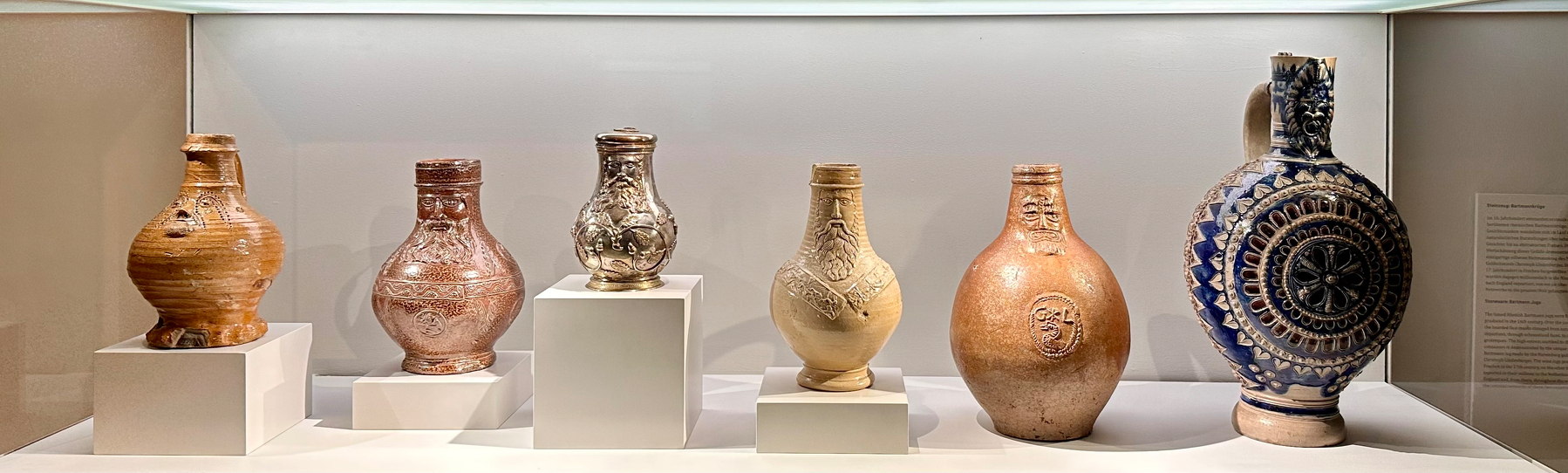
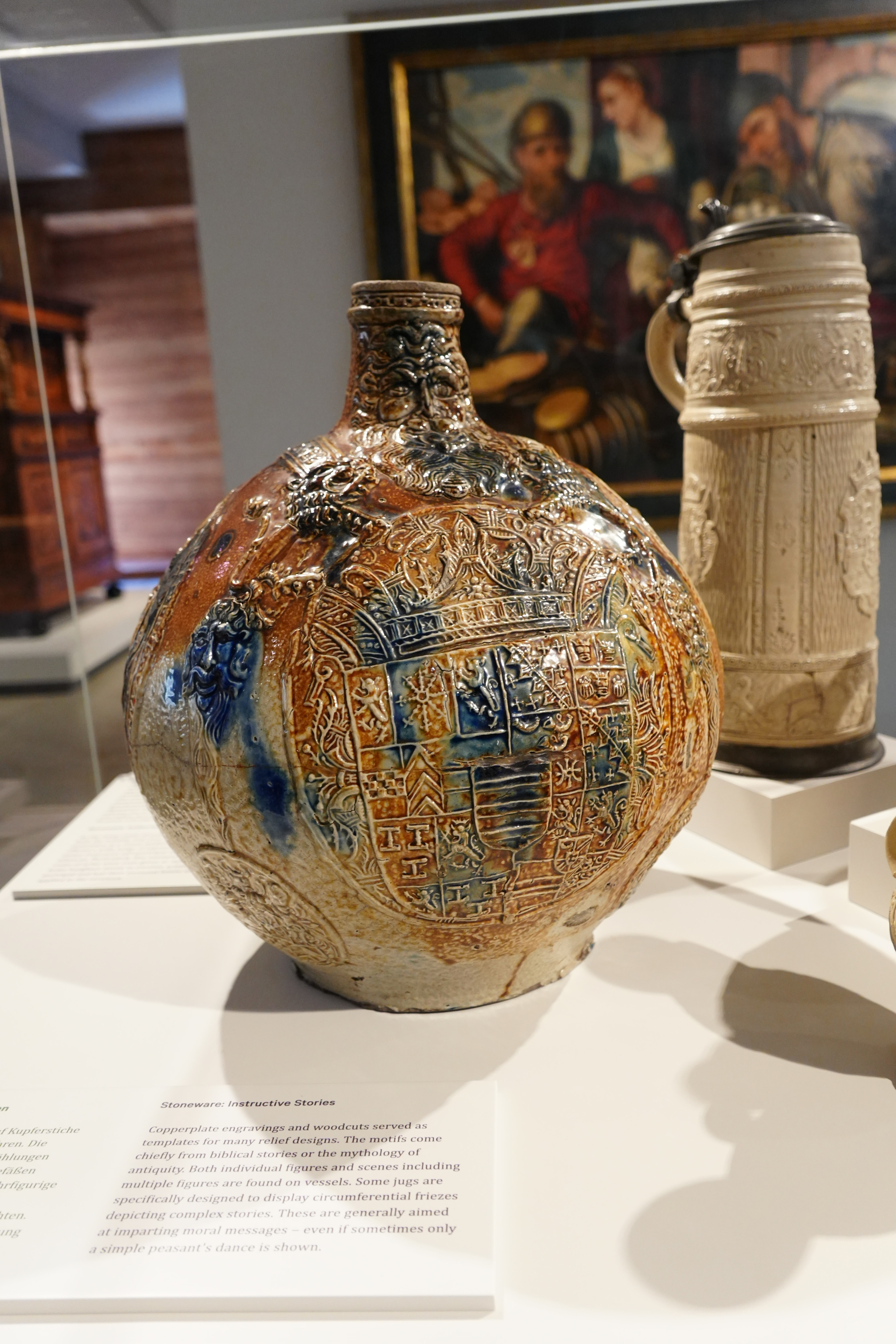
I quite liked the stoneware exhibited and also the rest of the museum, well worth a visit if you are in Bonn.
Next trip to Raeren, originally I wanted to go to Brühl first, but the museum is only open on Sundays, which does not work for the next few weeks. So, Töpfereimuseum Raeren
My simple project, identify sources of mediaeval Cologne trading goods, has now evolved into a fairly large scale research project.
Everything started so well.
The first trading good I looked at was stoneware. Specifically the Bartmann Krug.
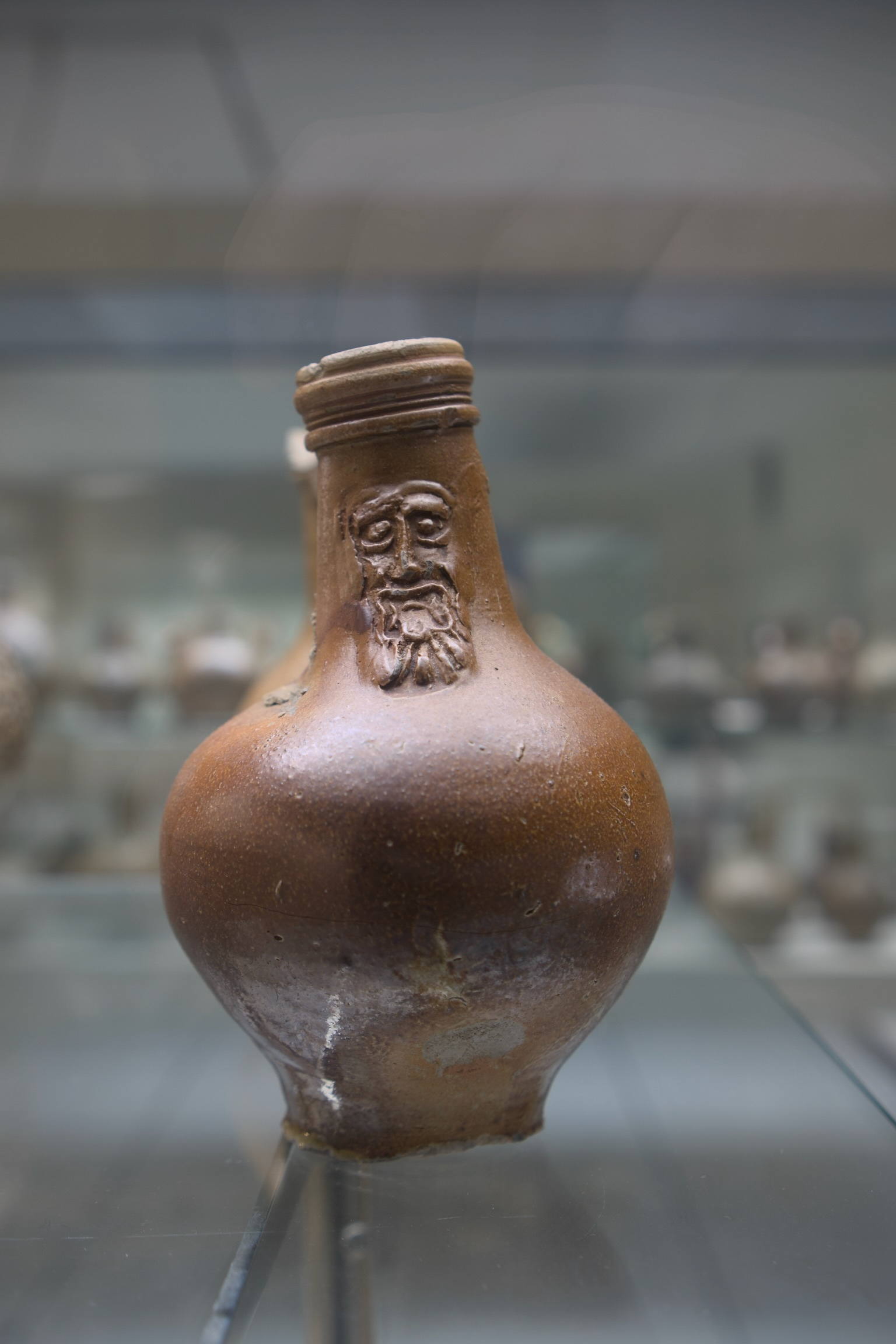
Right period, major production centres well with bicycle distance, most of the production centres even have a museum.
But, some of the information shown at the first two museums seemed to be a bit contradictory. So, as you do, I tried to find some information in books and online. Unfortunately, the publicly accessible books are broad generalist books. Online wasn’t much better. I started downloading papers, which then presented quite another challenge, namely, too much information [1].
I also stumbled across the website of a project between various research institutions called Bartmann goes global another wonderful timesink.
So, with one thing or another, I have now got a growing Obsidian vault with 250+ (and counting) documents. Which I’m now cross referencing [2]. As you do.
[1] as in, eg. Finding the downloadable archive of the Hansische Geschichtsverein, who have been publishing about the handsome, including Cologne, for the last 150 years plus.
[2] which led me to confront my lack of skill with bash and python scripts
#HistoryCycle #steingut #stoneware #steengoed #bycicle #retirement
Rhenish Stoneware 3
In that post I visited Frechen to look at the Keramion Museum, follow the Töpferpfad and see, whatever there still is to see. I did, however, manage to miss two excavated kilns.
So, today I went back.
Here is a description of the kilns Töpferhof in der Broichgasse (in German)
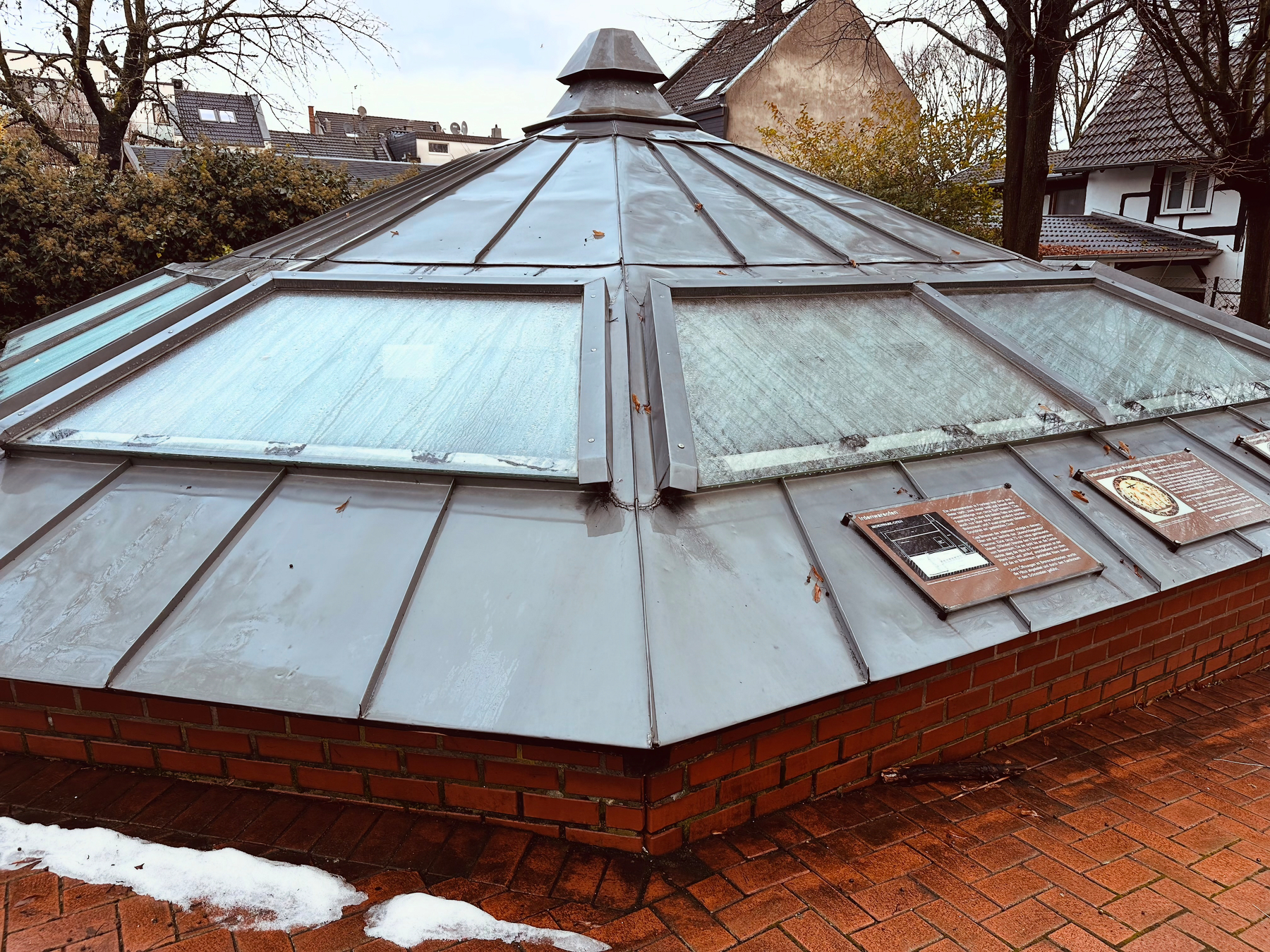
The kilns are under this pyramid and since all the windows were covered with raindrops, I couldn’t photograph the inside.
Here, at least, are the signage at the site.
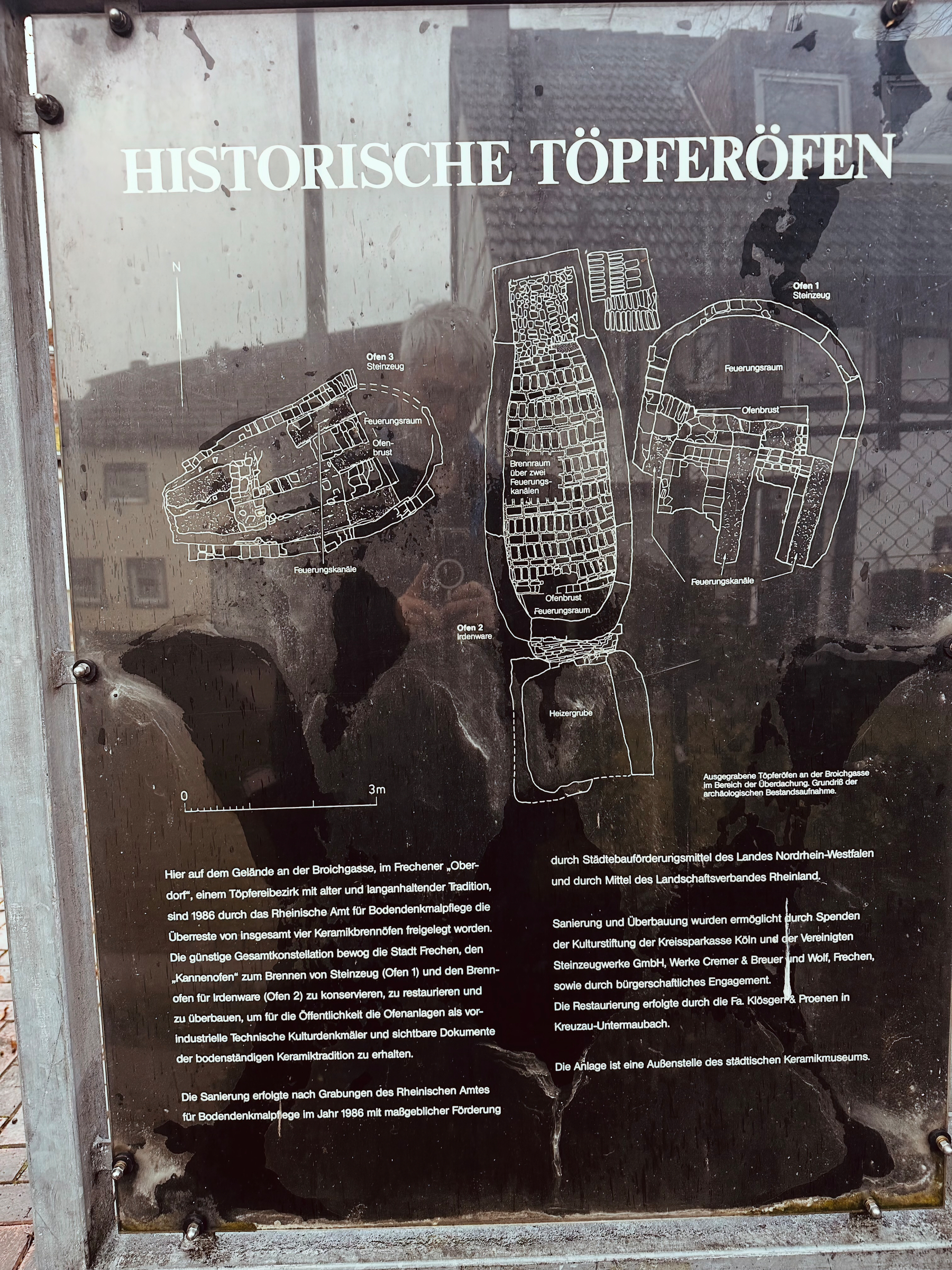
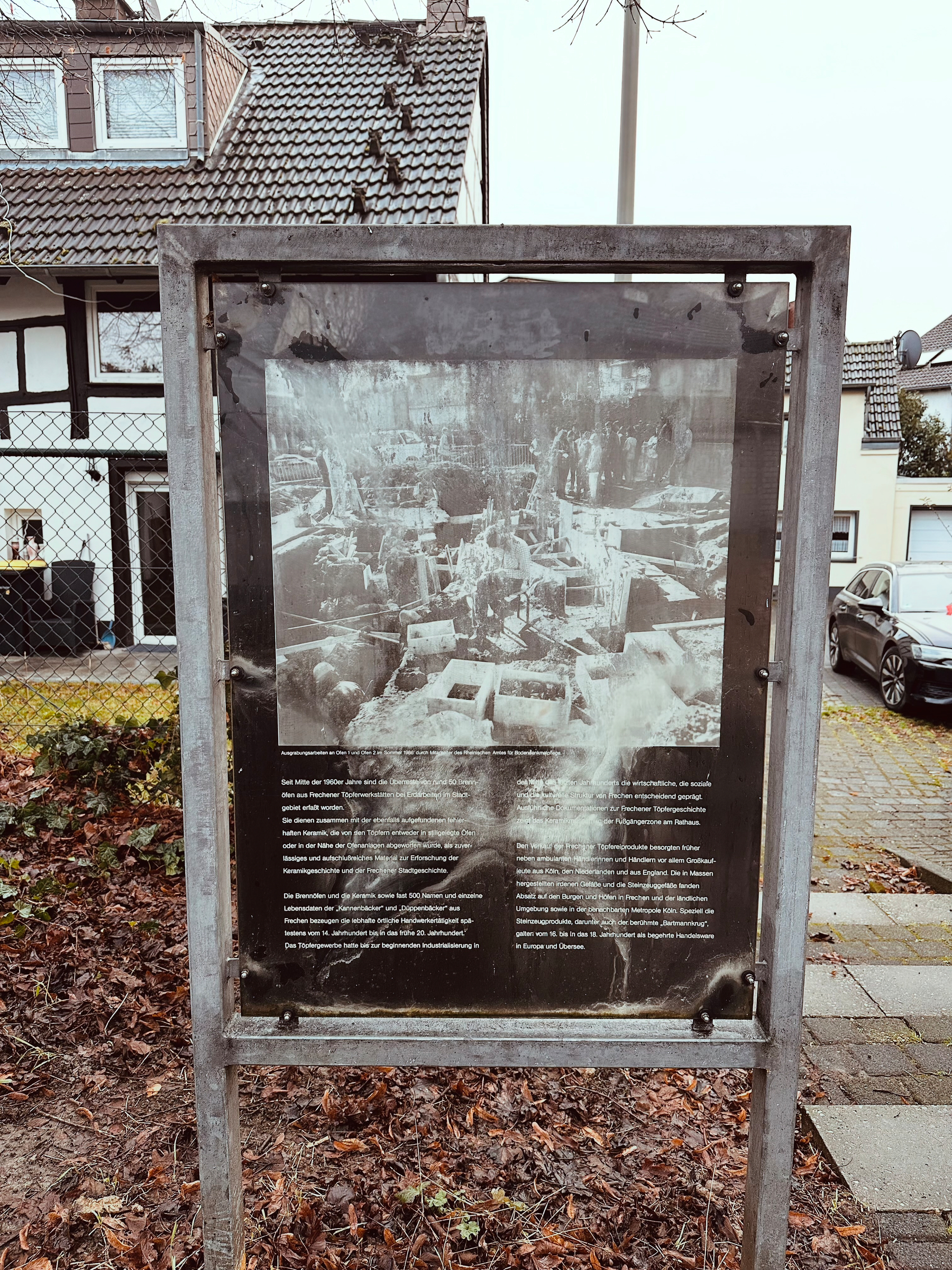
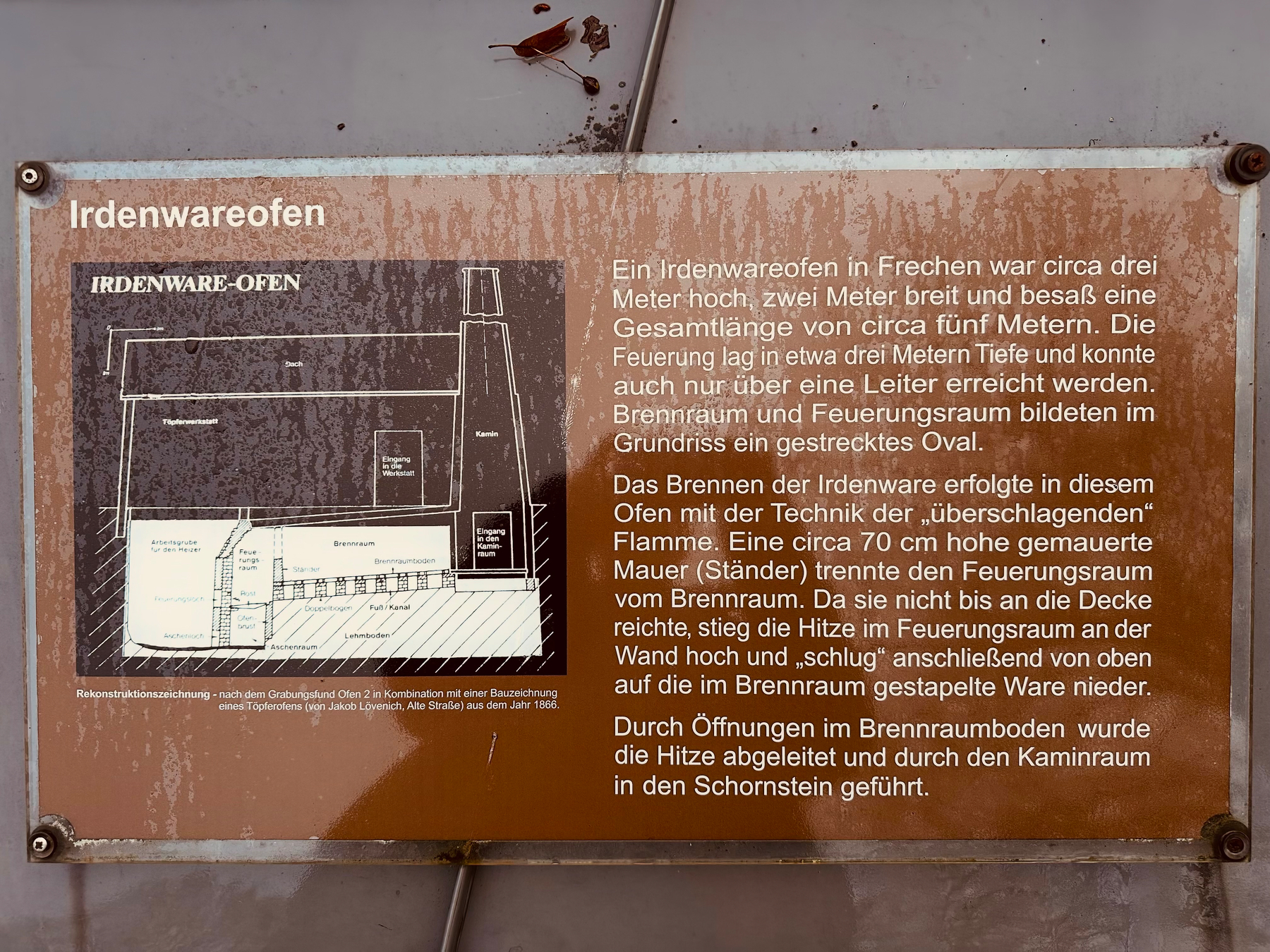
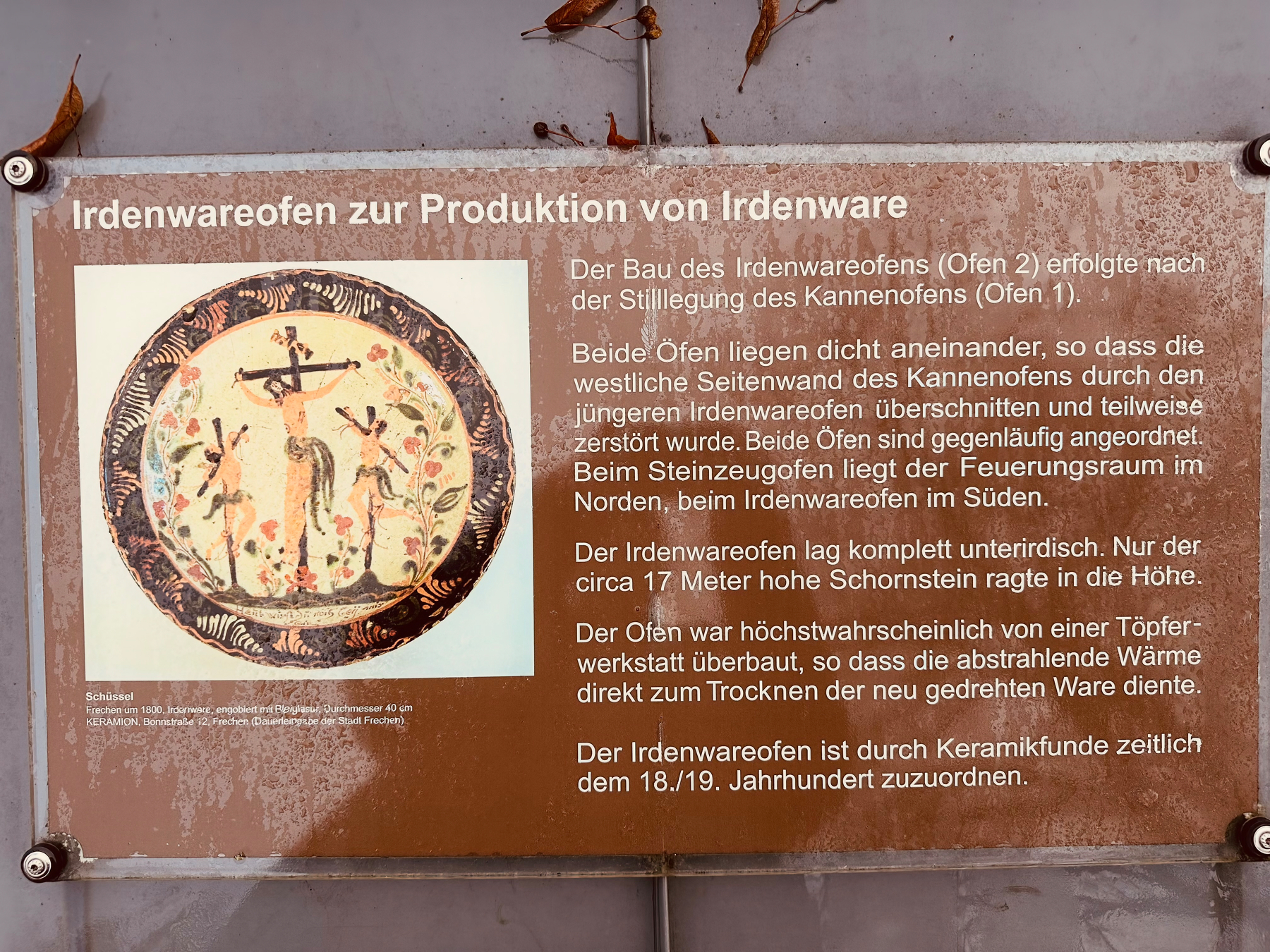
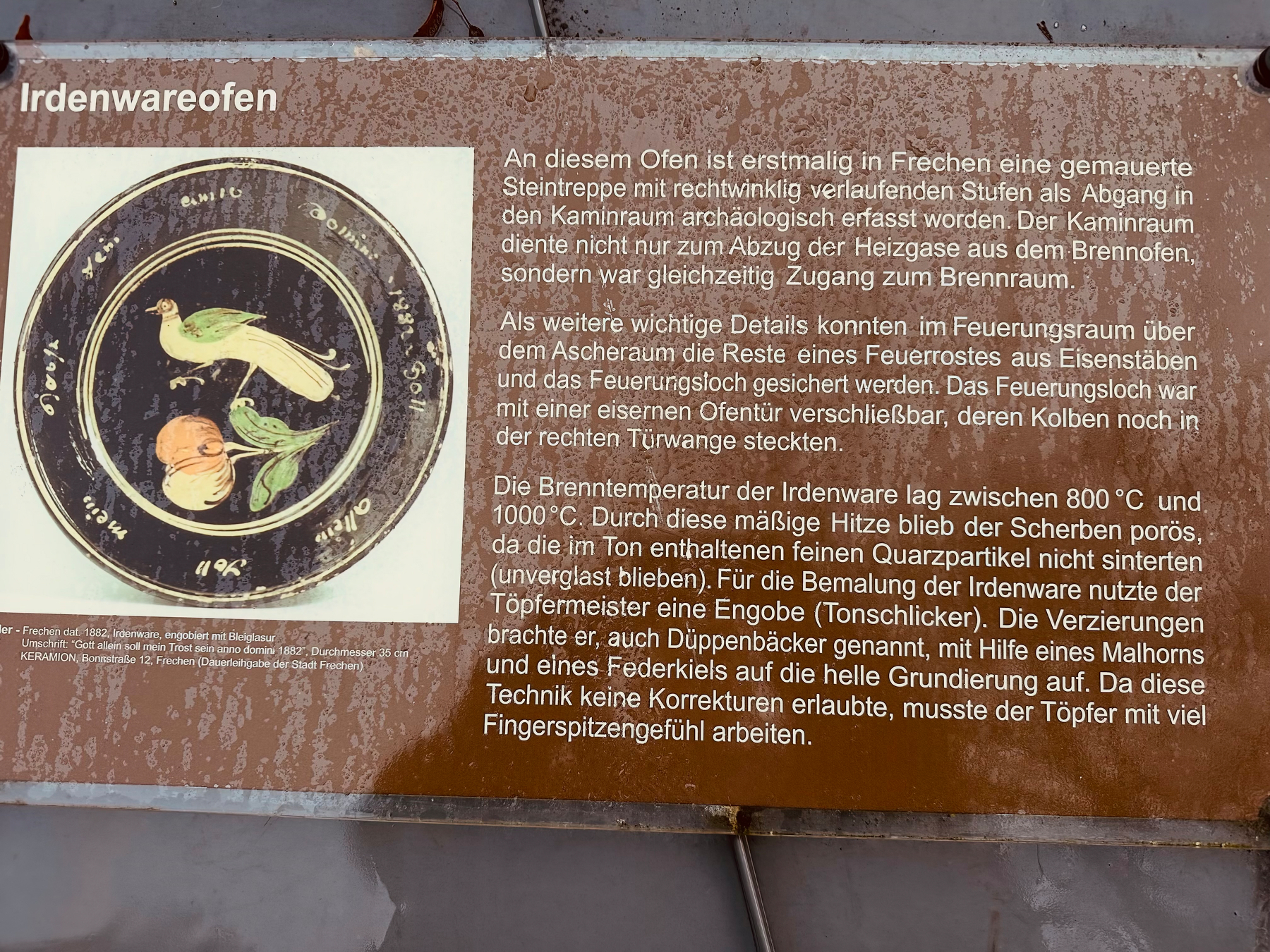
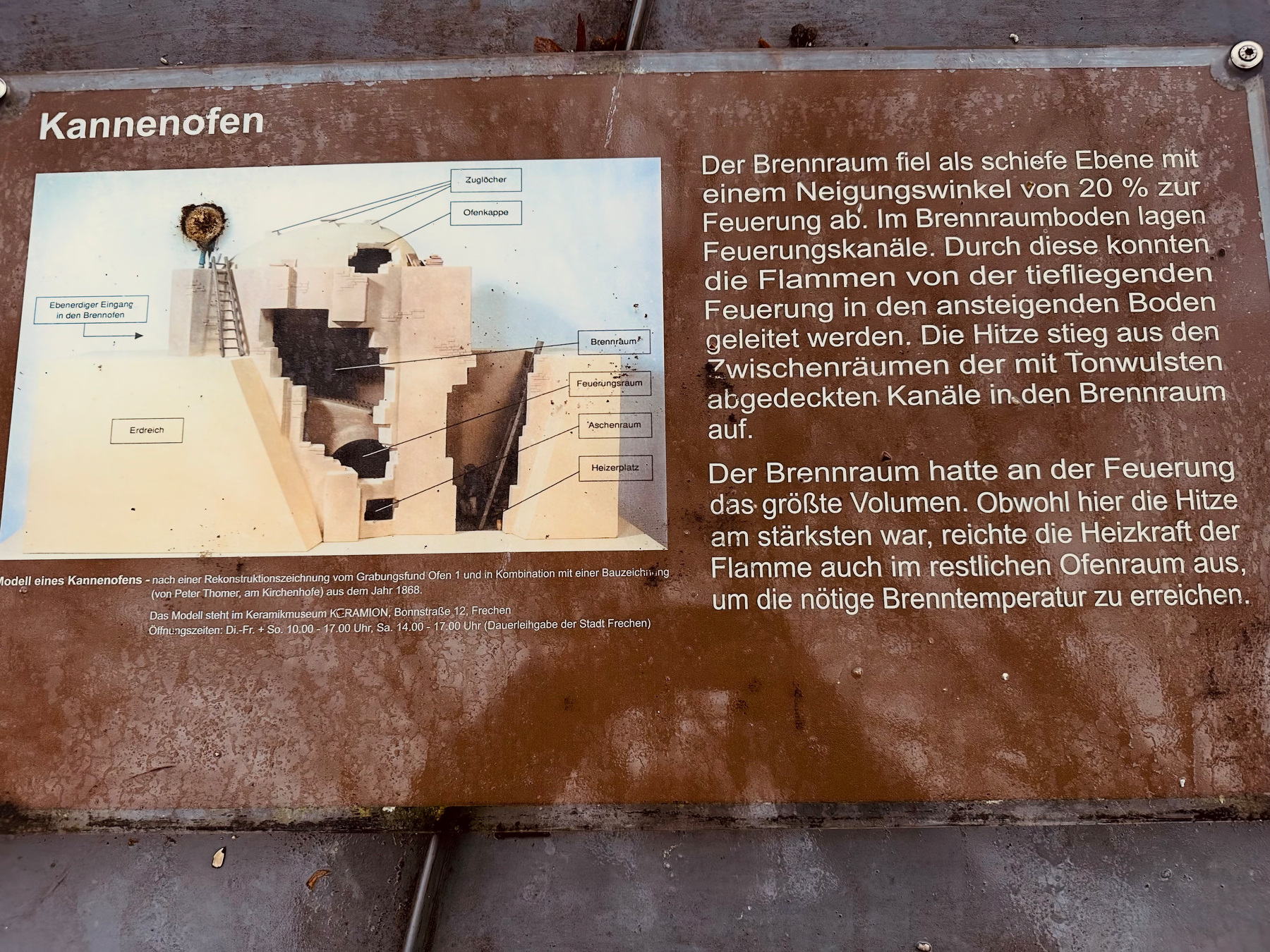
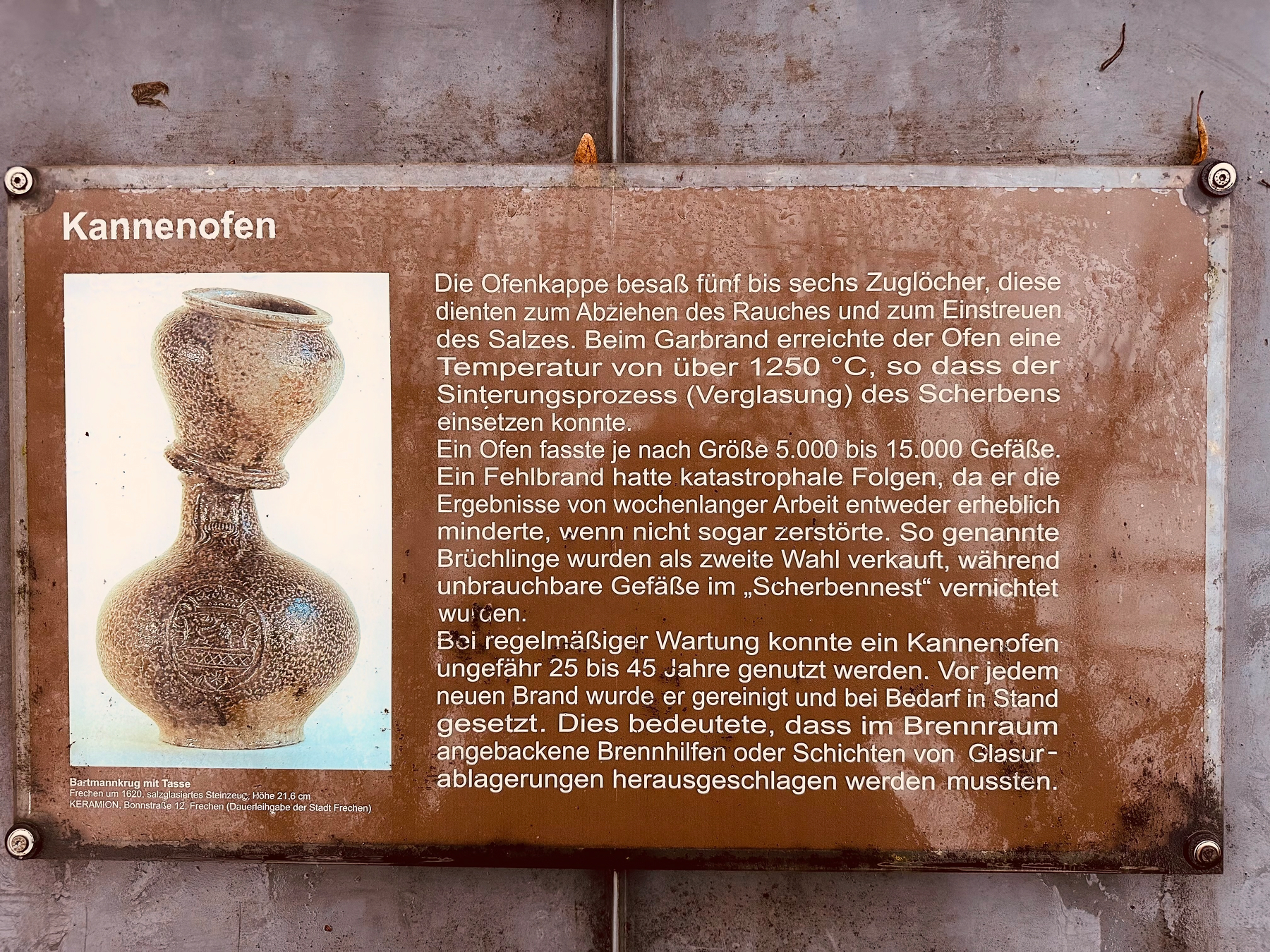
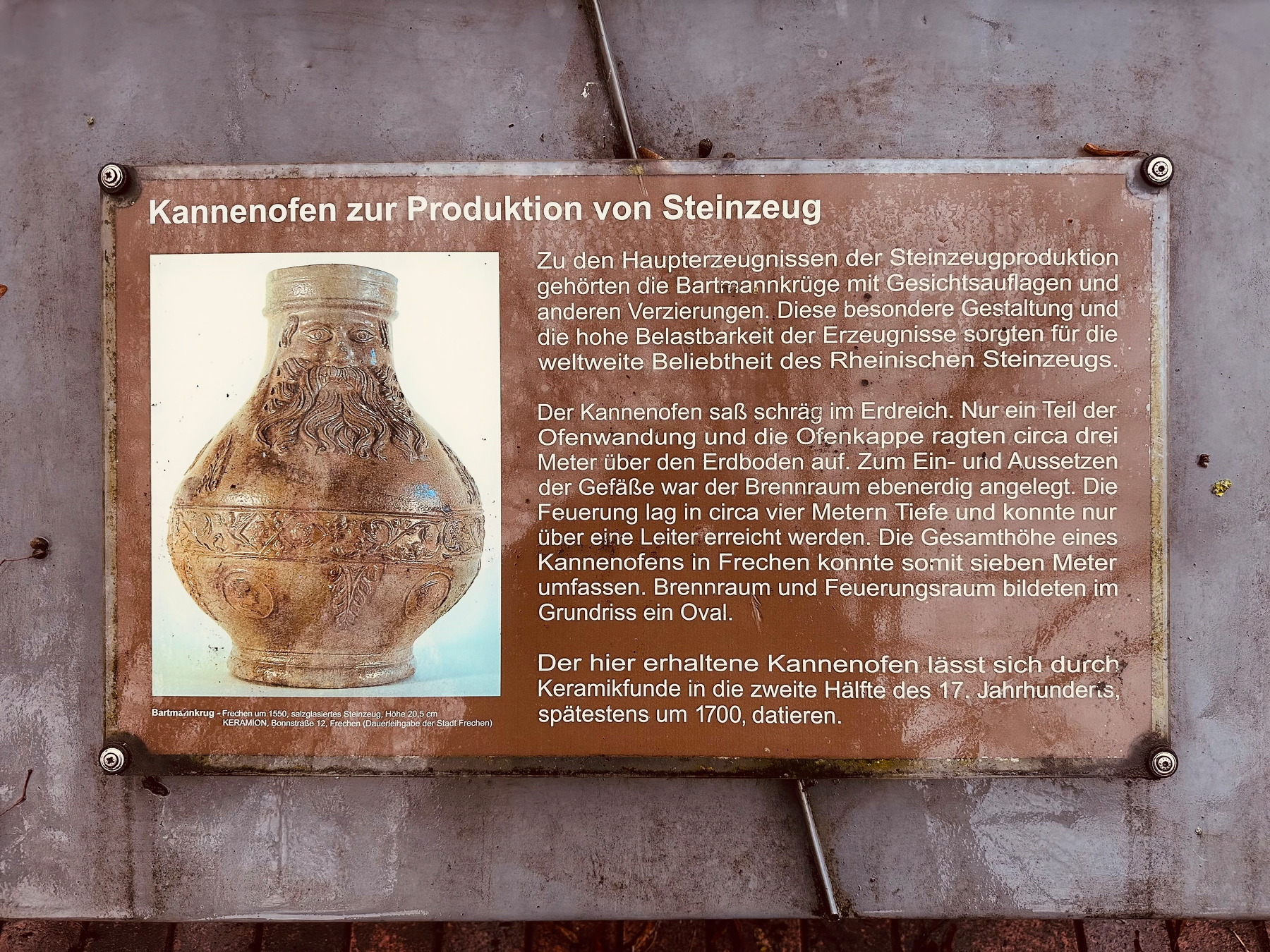
On my Rhenish Stoneware map the next stops should be in Badorf and Pingsdorf, both close to Brühl.
Rhenish Stoneware 2
Yesterday I visited the Stadtmuseum Siegburg to pick up on the exploration of Rhenish Stoneware, one of the successful trading goods of medieval Cologne, as previously mentioned here.
Because I wasn’t awfully keen on a 80 km plus bike ride in the winter with snow on the forecast we went by car and also cleared some errands on the way to and from Siegburg.
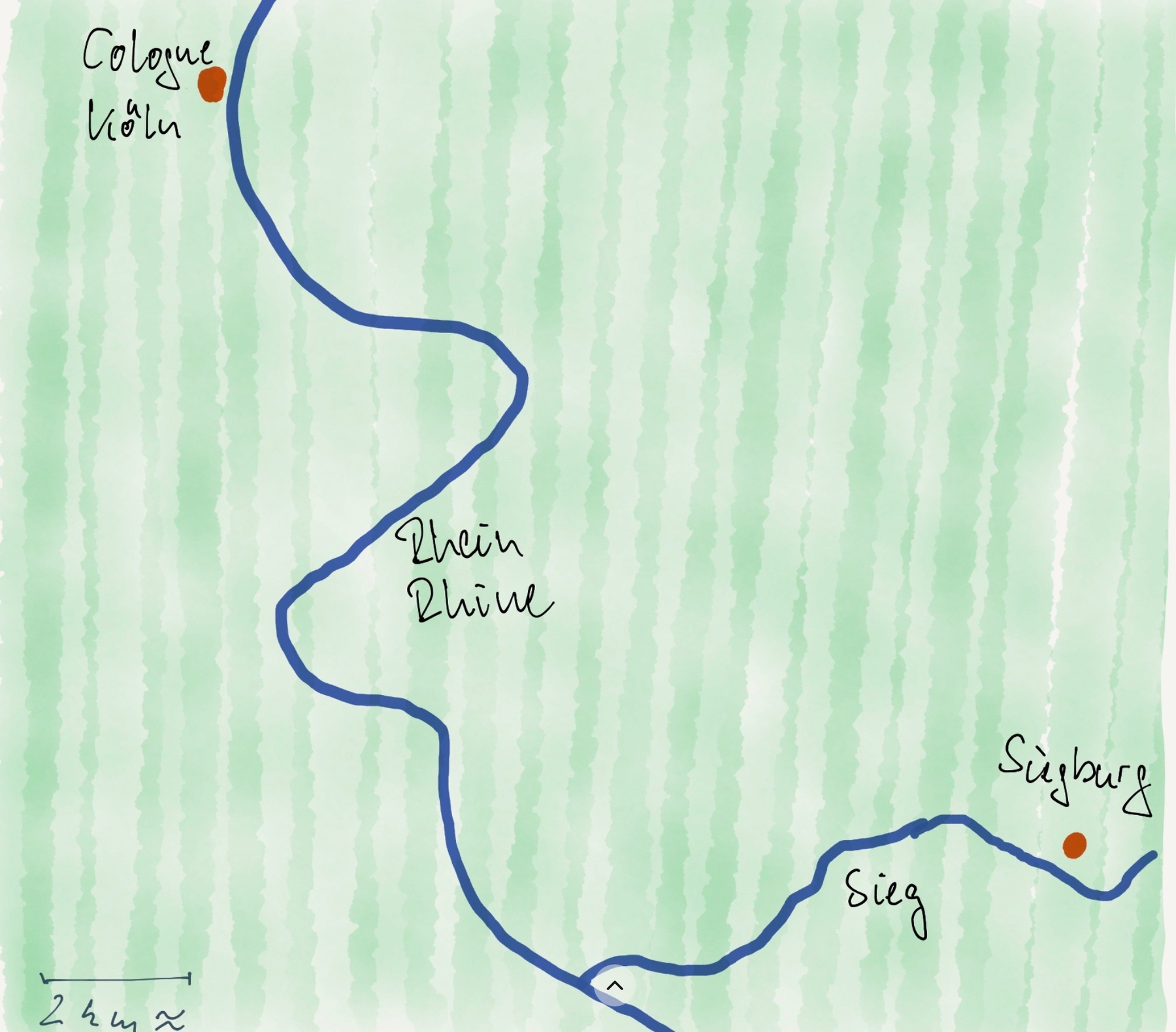
For background on Siegburgs history, here is Wikipedia on the city.
Unfortunately photographing was not allowed, so only two pictures.
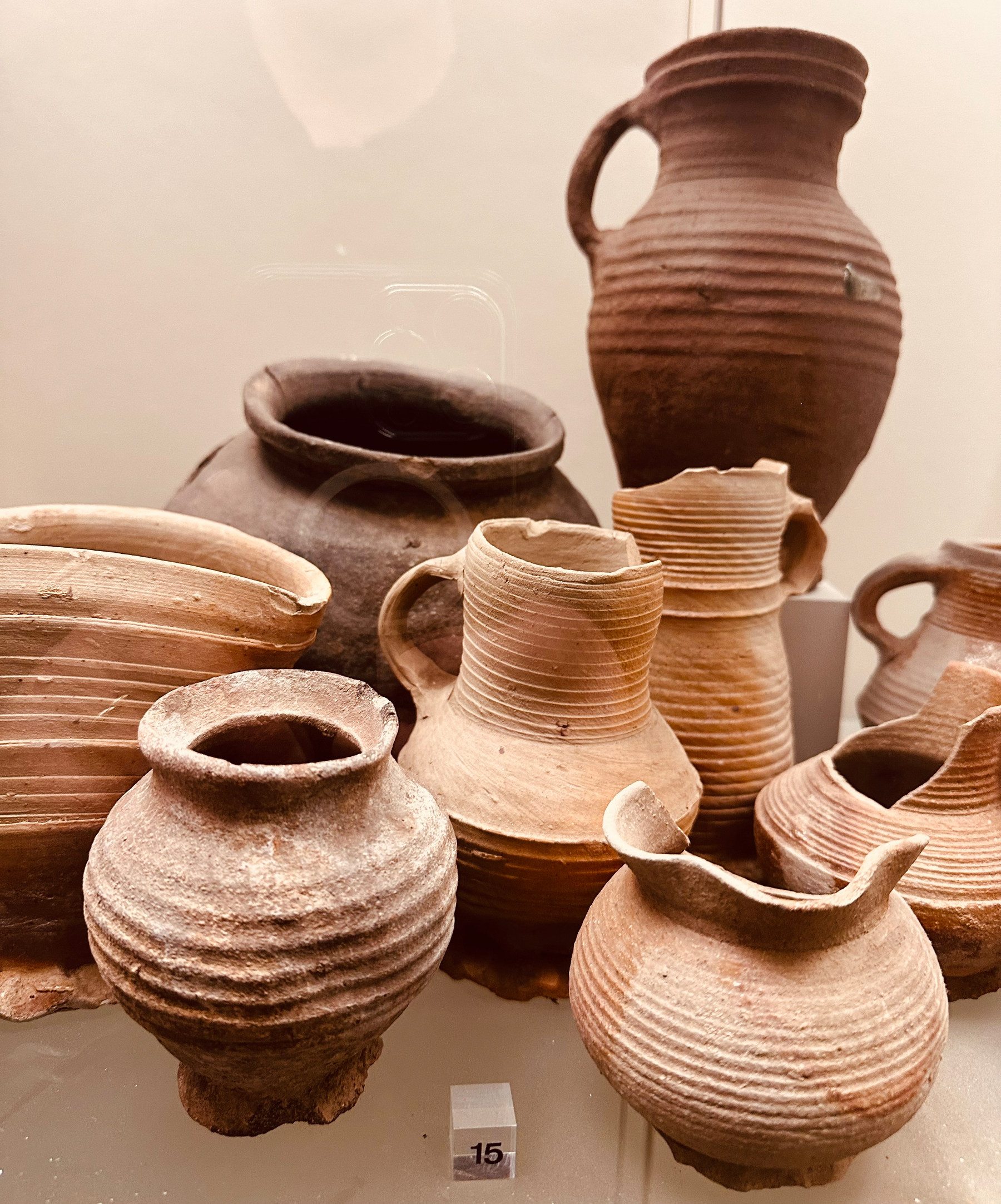
More information on Siegburger Steinzeug, German only, Wikipedia. Siegburg produced two qualities of stoneware, one for domestic consumption and traded all over the surrounding area and the Bergische Land, Wikipedia. And then there was the “good stuff” which was traded from Cologne. Cologne traders came per boat up the Rhine and the Sieg to Siegburg to collect the stoneware, also Siegburg traders brought it to the market in Cologne. From there it went all over the Baltics, Scandinavia, Netherlands and England.
And now for some gruesomeness, the top of Siegburgs pillory:
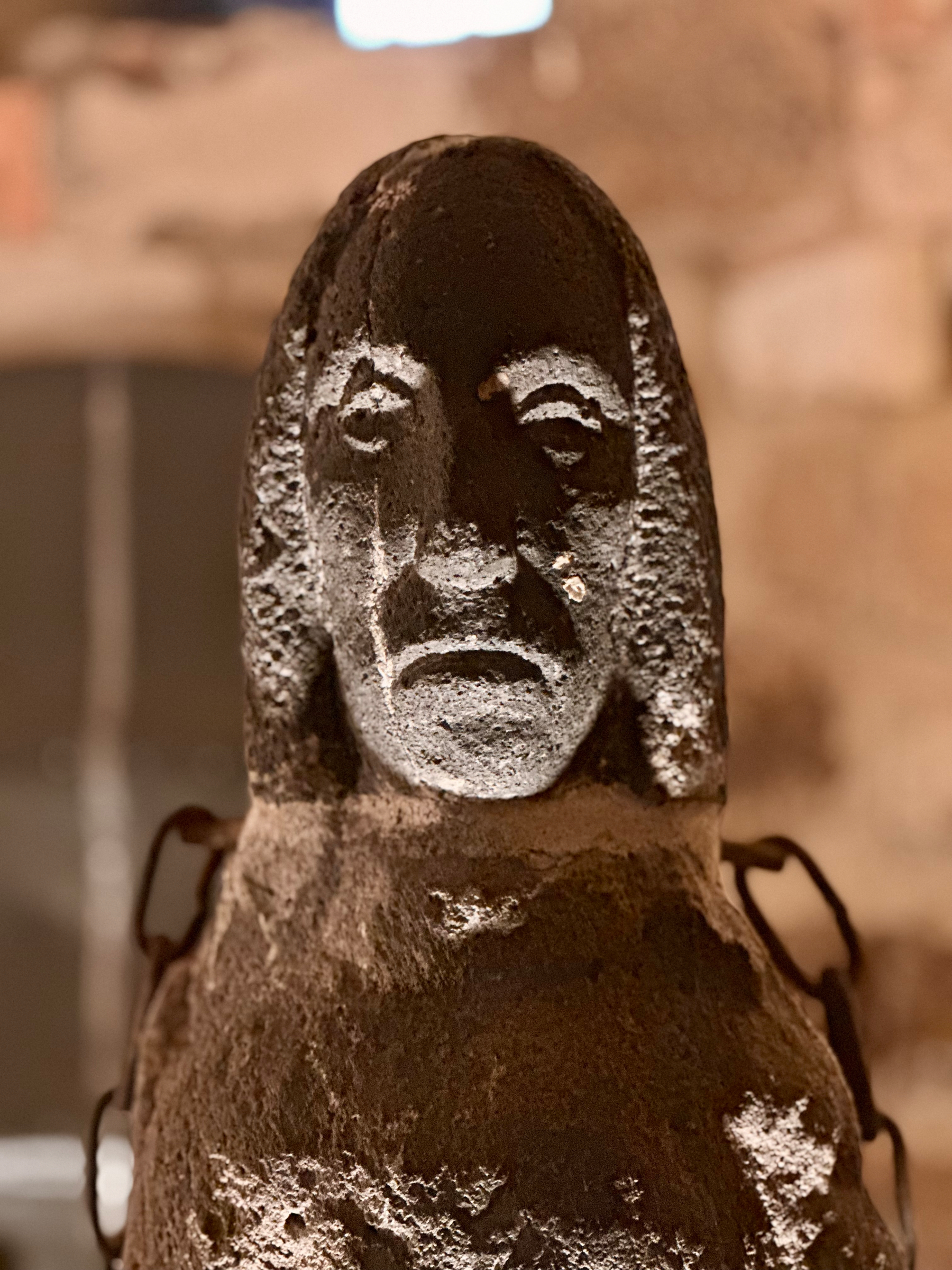
‘Neujahrsvorsatz’ #FotoVorschlag
Nächste Tour Siegburg, muss nur etwas wärmer werden.
#photography #fotografie #fahrrad
Some more stuff on salt
The Hanse and the Dutch (specifically Zeeland) traded Baiensalz (salt from the Bay de Bourgneuf, Spain and Portugal). This salt trade was possible because it was part of a larger trade network see WIKI german
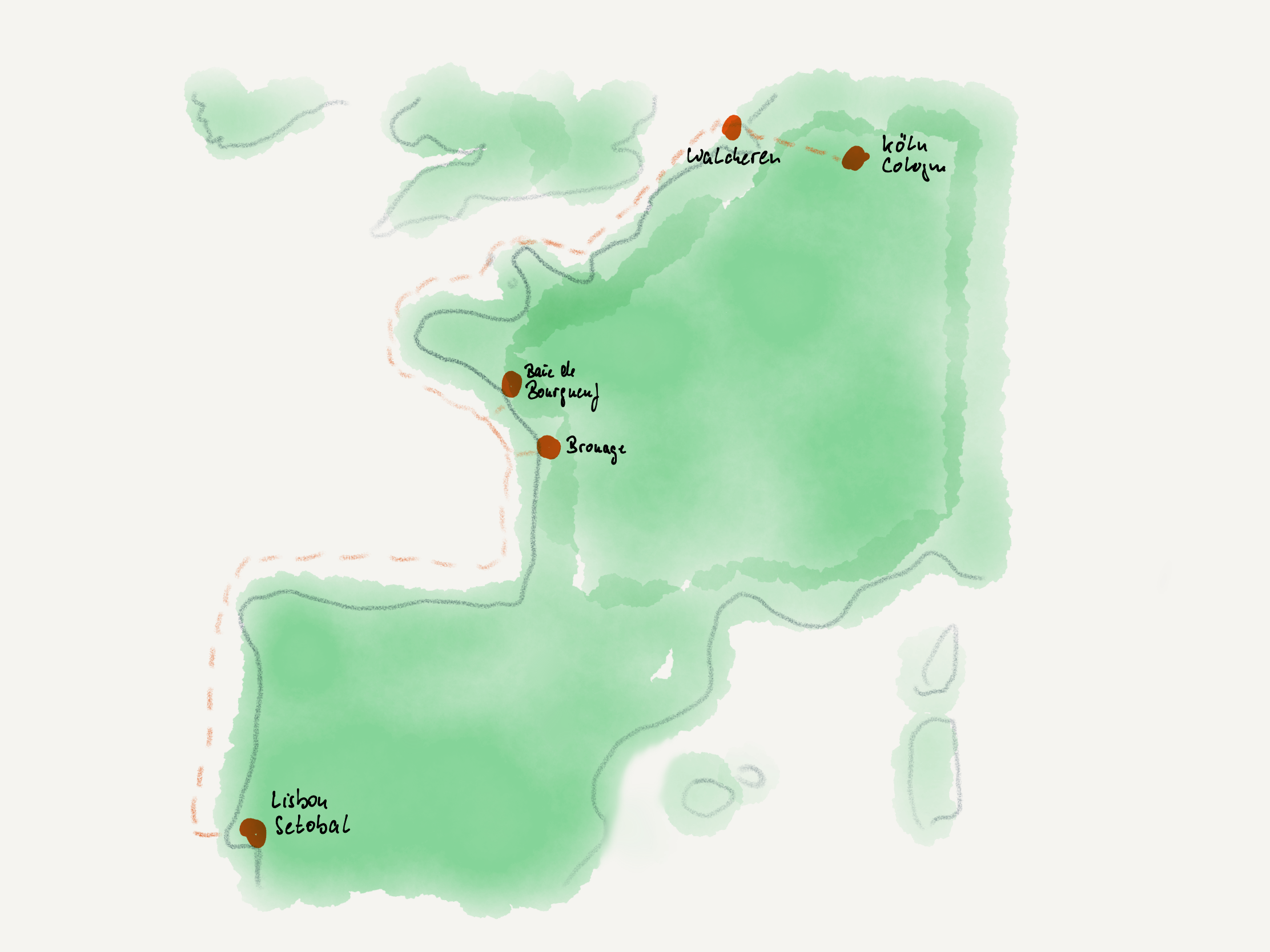
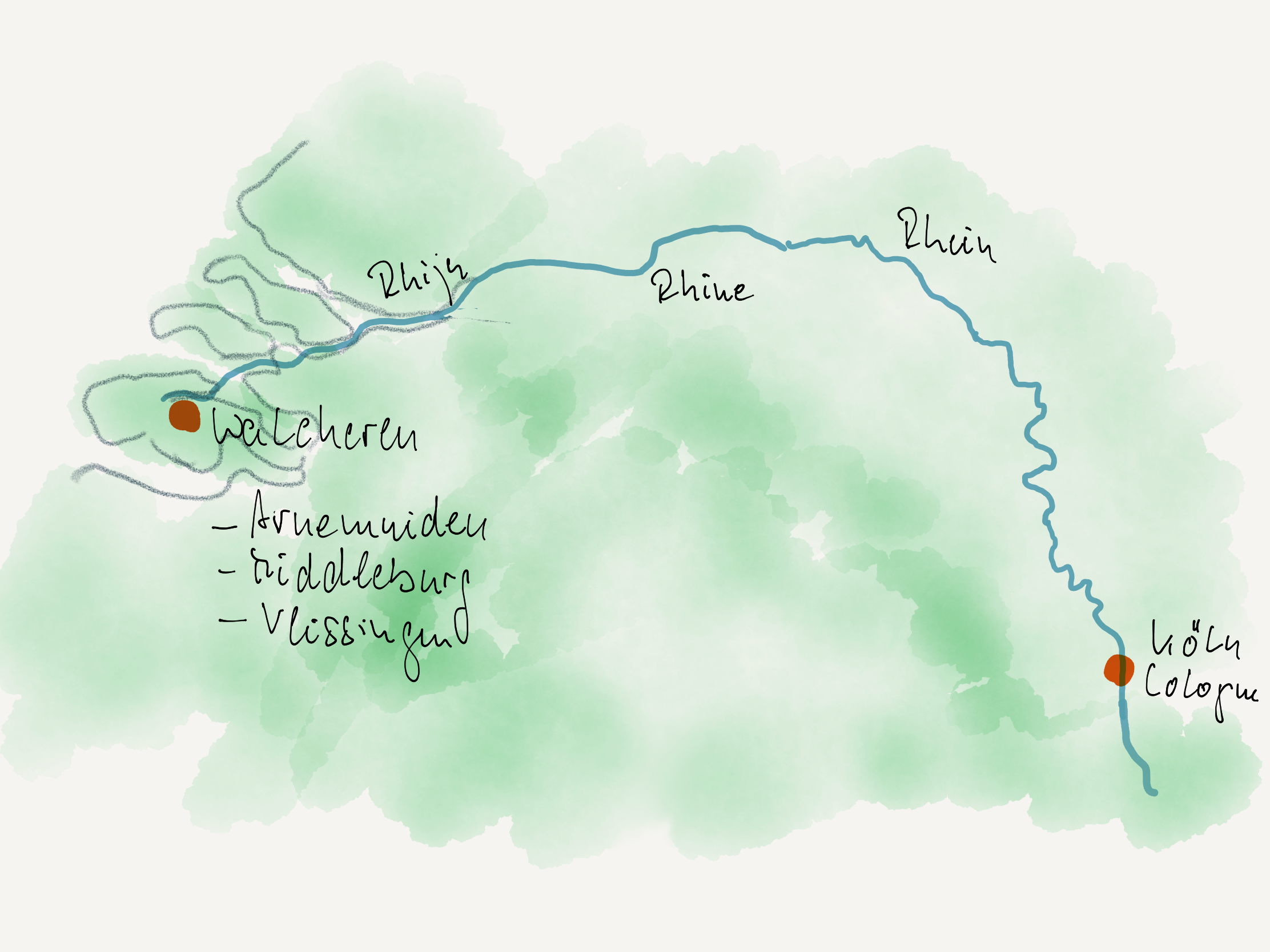
During the 16th century Zeeland and especially Walcheren was important in this trade and imported, refined and then exported large quantities of salt. Some of this salt traveled over the Rhine to Cologne, where, next to salt from Lüneburg, it was used to salt fish, but also was traded directly, see Trading goods of medieval Cologne and Ventgüter
Here is a map of that flow:
Very slowly getting into a rhythm
Well, almost, it still feels like (fairly extended) vacation, but I’m starting to allow myself to take time for my own stuff.
But talking about vacation, first we went back to Walcheren for another week, which despite the rain, and there was a lot of rain, was glorious. I also took a lot of photographs, so in terms of my retirement plans that also was quite productive.
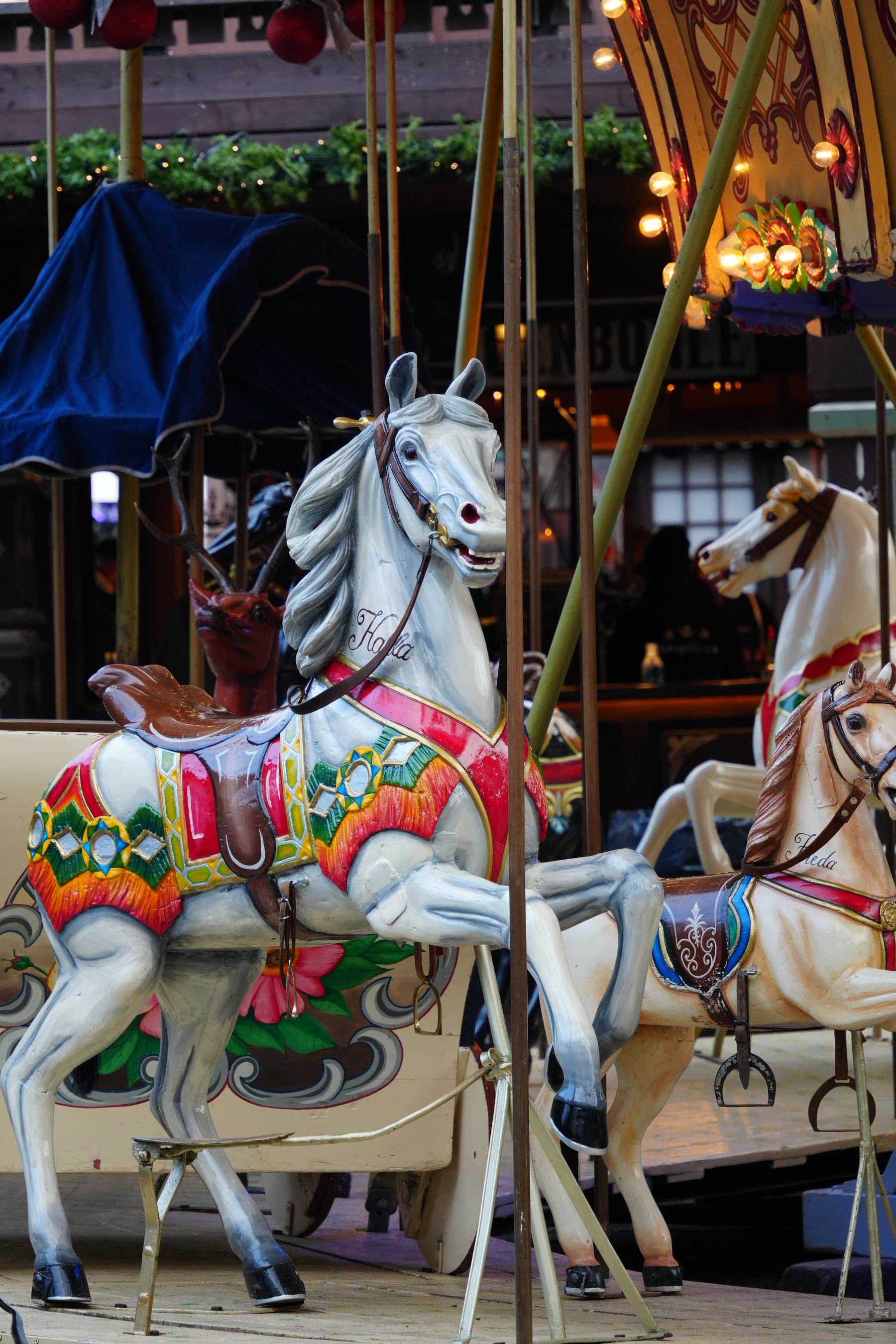
During our vacation we also visited Arnemuiden, which today is a fairly small, fairly modern looking suburb of Middleburg. Go a few centuries back Arnemuiden was an important harbour on Walcheren, sitting at the mouth of the river Arne which linked Arnemuide with the Verse Meer and thus with international trade. History of Arnemuiden
What piqued my interest is that Arnemuiden was an important trading center for salt. Originally Zeeuwse Zout was made by burning turf, but in the 16th century Iberian and French sea salt was refined on Walcheren.
Part of this salt was used to salt fish, some of which was traded down the Rhine and was then offloaded in Cologne, see Trading Goods of Cologne and especially Ventgüter.
Another part of this salt was traded directly, partly down the Rhine to Cologne, where it was either traded on, or used in the salt fish trade which provisioned large parts of the southern Holy Roman empire with fish for lent and other religious fast days.
In a (not really) surprising twist, cruising the History of Arnemuiden I happened on this page, Rheinisches Steinzeug
Coming back to photography, there was also time for a visit to Cologne Zoo.
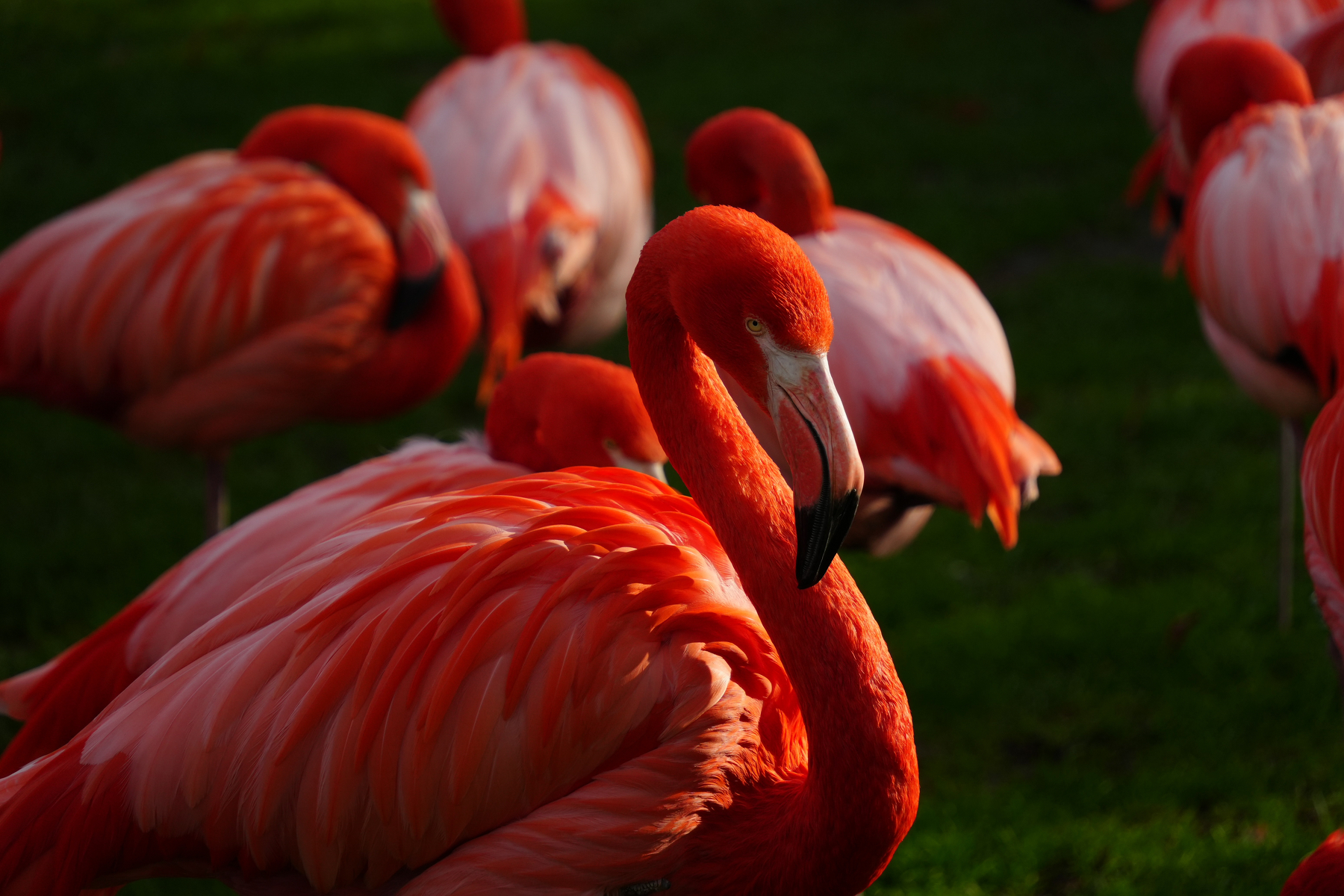
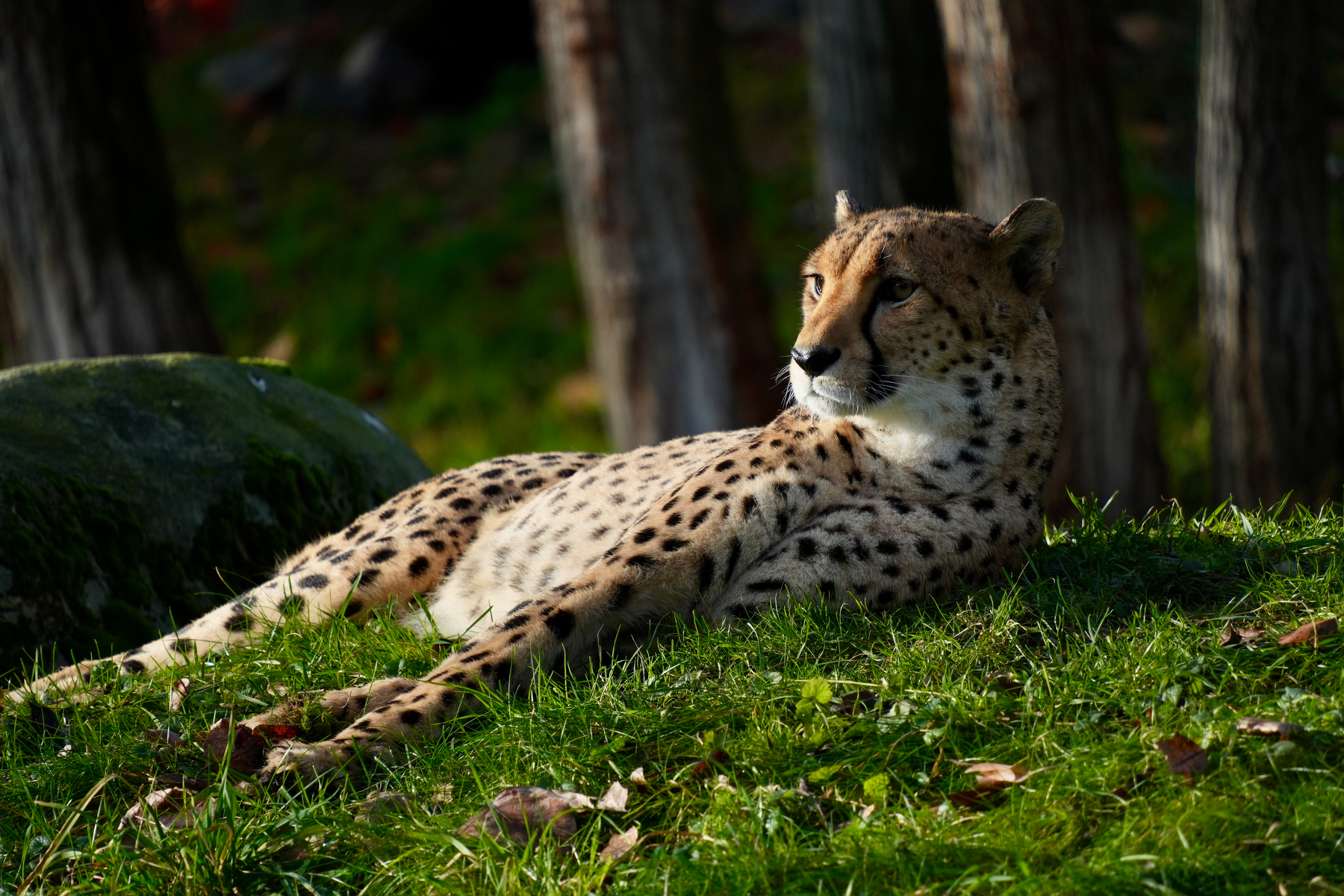
Slowly getting there
The first Cologne trading good I’m looking at is stoneware. It was produced in the wider area around Cologne from Raeren in Limburg down to Höhr-Grenzhausen in the Westerwald.
The goods were traded from the Alter Markt in Cologne and went all over northern Europe and from The Netherlands and England to Africa, Indonesia, America (North and South) and to Australia.
My first trip went to Frechen, though I have to go back as I managed to miss the kilns.
The next trip will then probably go to Siegburg.
#retirement #history #cologne #cycling #photography
Rheinisches Steinzeug
I did my first cycling trip to a source of a medieval trading good, traded in Cologne. This is part of my retirement keep active plan. Combine local history, cycling and photography.
Steinzeug or stoneware is a type of pottery that has been taken up to 1.300 C or more and has vitrified. Stoneware is impermeable to water and much tougher than normal pottery. Stoneware was first produced and traded from Cologne from the 14th century onwards.
| Location | Visit | Remarks |
|---|---|---|
| Cologne | - | never with the focus on stoneware, there is of course the “Alter Markt” as the main market, and various places where historically it was produced |
| Frechen | yes | went to the Keramion, need to come back to look for the places the stoneware was produced |
| Siegburg | - | never with the focus on stoneware, various places where historically stoneware was produced |
| Raeren | - | open |
| Langerwehe | - | open |
| Badorf, Pingsdorf | - | open, both near Brühl |
| Westerwald (Höhr-Grenzhausen) | - | open |
| Aldenhoven | - | open |
Basically I really liked the Keramion, especially some of the modern stuff, but they also have a good selection of historical pieces.
The second part of the trip was me following the Keramikweg. In theory this would have included some of the locations of historic kilns, amongst other things. Unfortunately I did not find the kilns, have to go back and do some better research before I go. The other things take the stoneware tradition of Frechen via construction and industrial stoneware to today. My wife used to work for a company that exported stoneware sewage pipes throughout Europe.
Total trip, 43 km
I am going to use the hashtag #HistoryCycle on Mastodon and Micro.blog for this whole endeavour going forward.
Link to a summary of pottery in Cologne
www.fabriziomusacchio.com/weekend_s…
#HistoryCycle #stoneware #cycling
Stoneware from Frechen - Cologne trade goods
Cologne traded stoneware from Frechen, and some other places, up and down the Rhine Frechener Steinzeug.
The main product was the Bartmannkrug
Trading goods of medieval Cologne
As mentioned before, as part of my retirement I want to combine some local history with cycling trips and photography. See my latest update on all that.
Anyway, being somewhat methodical and also easily distracted, I choose to have a look at trading goods, where they came from and where they went. The idea being, if the from and to was close enough, I could go there by bicycle, and take photos. But, of course, there is no ready made list of trading goods (that I could find).
Therefore, back to being methodical. I started collating a list of goods and started with the so called Stapel Goods, basically any trader passing Cologne had to unload and offer their goods to Cologne traders for three days (thereby creating harbour, unloading, and inspection fees, tolls, not to forget, as the trader had to spent three days (and nights) food and lodging).
Here is the draft list of Stapel Goods
The columns:
Deutsch - the German term
English - yes, the translation
Road Name - Road/Place/Street name in medieval Cologne
Source - Where the goods came from
Destination - Where the goods went
Visit? - Future plans to visit a source/destination
Remarks - remarks
Anyway, while researching, I also found a category called Ventgüter These were goods that were not only unloaded, offered for sale and then loaded again, no, these goods were also, for a fee, unpacked, inspected, marked as inspected and repacked or destroyed if they did not pass.
- This was good for Cologne because of opportunities, fees and reputation
- Semi good for the trader, as they could get somewhat better prices for inspected goods
- Goodish for customers, as they got quality goods but for a higher price
Here is a good German article from museen.koeln on all of this Erfolgreich gegen die Wirtschaftskrise: Mittelalterlicher Protektionismus
Ventgüter - Basic List
| Deutsch | English | Road Name | Source | Destination | Visit ? | Remarks | |
|---|---|---|---|---|---|---|---|
| Heringe | herring | Fischmarkt, Stapelhaus | Netherlands | ||||
| Stockfisch | stockfish | Fischmarkt, Stapelhaus | Netherlands | ||||
| Bücklinge | herring | Netherlands | Fischmarkt, Stapelhaus | ||||
| Schollen | plaice | Netherlands | Fischmarkt, Stapelhaus | ||||
| Kabeljau | cod | Netherlands | Fischmarkt, Stapelhaus | ||||
| sonstige gesalzene, geräucherte oder getrocknete Seefische | other salted, smoked or dried see fish | Fischmarkt, Stapelhaus | Netherlands | ||||
| Rüb- und Leinöl | beet and linseed oil | ||||||
| Butter | butter | in der Buttergasse, Buttermarkt | |||||
| Talg | tallow | ||||||
| Schmalz | lard | ||||||
| Speck | bacon | ||||||
| Tran | tran | ||||||
| Teer | tar | ||||||
| Honig | honey | ||||||
| Salz | salt | Die salts gaß | Arnemuiden, NL | yes |
Stapelgüter - Basic List
| Deutsch | English | Road Name | Source | Destination | Visit ? | Remarks |
|---|---|---|---|---|---|---|
| Lebensmittel | food | too many to list, this will eventually be a separate post | also see the table of vent goods | |||
| Vieh | cattle | |||||
| Wein | wine | Middle Rhine, Alsace | Lower Rhine, England | |||
| Pferde | horses | |||||
| Holz | wood | Holzgasse, Holzmarkt | Oberrhein, Bergisches Land | mostly construction wood | ||
| Steine | stone | |||||
| Schiefer | slate | |||||
| Kalk | lime | |||||
| Eisen | iron | Smedegasse, Smede Portz | Bergisches Land | |||
| Blei | lead | Blijgasse, Dat Bly portgen | ||||
| andere Metalle | other metalls | |||||
| Wolle | wool | |||||
| Flachs | flax | |||||
| Tuch | cloth | |||||
| Leinwand | canvas | |||||
| Häute | skins | |||||
| Leder | leather | |||||
| Lohe | lohe | |||||
| Pech | pitch | |||||
| Fassreifen | barrel hoops | |||||
| Weinbergpfähle | vinyard posts |
Getting on
It’s been 6 weeks since starting the #pension #adventure
It still feels like an extended holiday. Which, as far as it goes is fine. BUT it also means that I’m mentally waiting to agree what to do today with E. which does not help with establishing new habits.
Here’s a short recap of what happened
clearing out the work flat
Done, was as much fun as it sounds like
vacation
We did spent a week of vacation on Walcheren, which was, as always, very nice and relaxing. Though because of weather the kites stayed in their bag.
cycling
September was not a good month, I was still working half of it and then we did clean out the flat.
Oktober is much better, I’ve done 375 km so far, and there is still a week (with a lot of rain forecasted) to go.
photography
Still getting to grips with the new camera. I’m quite happy with it. I’m now about 1800 pictures in and starting to appreciate the possibilities. Also I’ve started sorting through our photos and putting them into more of a system than one big bucket.
Still open to do’s:
- Finish the organizing
- Finish sorting into family photos and “good” photos
- Start grading the “good” photos and distill what lessons there might lurk for future photos
- Finish scanning the pre-digital photos. Both ours and the photos I inherited from my parents
local history, cycling and photography
The library membership was achieved, first books lended and almost finished. The books I took out look at Colognes early medieval and medieval history. I’ve also looked through a lot of online sources and am compiling a list of goods that were traded in Cologne.
This compilation has already given me some future cycling destinations, so the basic idea seems to work.
I also had some ideas on visualising the flow of goods and have recruited the daughter to help draw / map this.
other stuff
My plans for retirement also included
- Learning the ukulele (pending)
- Start archery (pending)
- Start Tai Chi (pending)
- Languages (pending)
- Volunteering (pending)
But, other, useful stuff got done
We renovated the kids rooms and now we each have our own room to do stuff in without regard to the other. Which will be helpful, as, see above, I’m still feeling a bit like vacationing. I’ve also cooked a quite a few new dishes, some of which will go into rotation
Yesterday I got my new library card in the big city next door. They have a whole floor with history books, that should help with the research on Cologne trade goods.
I’m also going through a book on Colognes medieval street names, looking for trades and goods.
A preliminary list of bike excursions is growing.
#history #photography #cycling #ebike #Cologne #Köln #retirement
What ever will I do now?
This is my first week of retirement, and mostly it was spent emptying out the flat (that I had in lieu of commuting 300 km a day).
Next week we’ll spend on Walcheren.
But then project cycle, look at historical stuff and take photos is a go.
I have been quietly researching (or beginning to research) Colognes trading goods through the centuries. These will inform the destinations.
Or so the plan goes.
#history #photography #cycling #ebike #Cologne #Köln #retirement
Retirement
As my retirement is nearing I’m considering (additional) hobbies.
Some should be solo activities, others should encourage social interactions and new contacts. Some should be sustainable even when physical activity is getting difficult. Some should promote physical fitness.
So, a preliminary list:
- cycling
- photography
- (local) history
- archery
- tai chi
- volunteering
- Volkshochschule
- Languages
Suggestion welcome
#retirement #hobbies